
Rug Cleaning in Purcellville, VA
There is a stretch every year, roughly February into April, when the ground here never fully dries and everything that walks on it comes indoors. Rug cleaning in Purcellville is shaped by that season more than by anything else in the calendar.
What mud season does to a wool rug
Northern Virginia clay is fine, it is orange, and when it dries in a wool pile it behaves like a pigment rather than like dirt. It works down into the foundation quickly because the particles are small, and once it is down there, walking on the rug grinds it against the fiber. That is where the real harm is. The staining is cosmetic and comes out. The abrasion is not cosmetic and does not.
Add dogs coming in from a wet field several times a day and the load on a rug near a back door in 20132 during those weeks is greater than everything the rest of the year puts on it together. Farm properties see the same thing with hay dust and manure, which are organic and will start to smell once they get damp inside a rug.
Let it dry before you touch it
The instinct when a dog crosses a rug with wet paws is to get a wet cloth immediately. That is the wrong order. Wet clay spreads sideways and gets pushed downward into the foundation by anything you do to it while it is soft, so a print the size of a paw becomes a stain the size of a plate.
- Leave the mud alone until it is completely dry, which may mean overnight.
- Break the dried crust gently with your fingers so it lifts rather than crumbles into the pile.
- Vacuum it up in slow passes from several directions.
- Repeat the vacuuming the following day, since more will have worked upward.
- Leave whatever color remains to a proper wash instead of attacking it with a bottle.
Doing that removes the great majority of what was tracked in, and it removes it as a solid instead of turning it into a solution that spreads.
Farmhouse wool and what it can take
The rugs we collect out this way are frequently sturdy: heavy village wool, flatweaves without a pile, braided and hooked rugs, and older machine woven wool. Heavy wool is forgiving in a wash and holds up well to the dusting these rugs badly need. Hooked and braided pieces need more care, since a hooked rug depends on its backing cloth and a braided rug depends on its stitching, and both can come apart if handled roughly while wet.
Wool itself is the reason these rugs survive a rural household at all. Lanolin left in the fiber stops dirt from bonding to it, which is why a wool rug gives up so much in a proper wash. That is also why the shampoo has to be mild: a strong alkaline detergent strips that oil out and leaves the wool dry, brittle and quicker to soil next time.
Grouping pickups on one day
Purcellville sits at the far end of the area we cover, so collections here are grouped rather than run individually. We set a day, work the whole town on it, and come back with everything on another single day. In practice that means booking a little further ahead than someone in eastern Loudoun County would, and it means we would much rather take four rugs from your house than one.
It also means telling us about the outbuildings. Rugs living in a barn office, a mudroom or a guest cottage get collected on the same visit if we know they exist before the truck is loaded. Rug cleaning in Purcellville is nearly always a batch job rather than a single piece collected on its own.
What we ask before the truck comes out
Count the rugs and measure the largest one. Tell us if any are hooked, braided or flatweave rather than pile, and whether any have a rubber or fabric backing, since those change the handling. Mention pet accidents even if they happened years ago, because urine that dried in the foundation is still there and needs treating before a general wash rather than during it. On a grouped route, knowing all of that in advance is the difference between one trip out here and two.
The wash itself
Every rug is looked over and its dyes checked for movement before anything else happens. Dry soil comes out next, and on a farm rug that stage is the bulk of the work: a wool piece from a house with dogs and a gravel drive can give up an extraordinary amount of grit before it ever sees water. After that comes the wash: hand work in the direction the pile lies, water kept cool, and a soap mild enough to leave the natural oils in the fiber. We flush until the runoff is clean and the acid balance is restored, extract, and dry the rug horizontally with fans until the foundation is dry all the way through. Four to seven days from collection to return.
Rug pickup and delivery in Purcellville, VA
Everything is collected and returned by us, rolled and wrapped. The most useful thing you can do is have the rugs accessible and the dogs somewhere else for ten minutes. Rug cleaning in Purcellville tends to be a spring job for exactly the reasons above, and the weeks after mud season are the busiest of our year out here.
Since we are already making the drive, it is worth combining. Mudroom and hallway carpet gets handled as carpet cleaning in Purcellville, the sofa the dogs sleep on as upholstery cleaning in Purcellville. Wall to wall through the rest of the house gets hot water extraction, long panels come down for curtain cleaning, and anything with a real odor problem needs pet odor removal rather than a wash alone. The same route serves Leesburg and Sterling.
Recent rug cleaning work
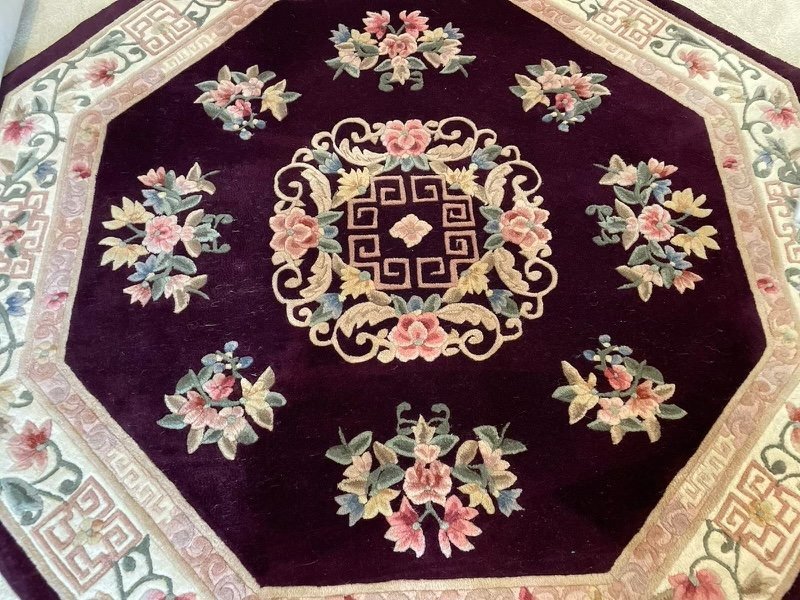
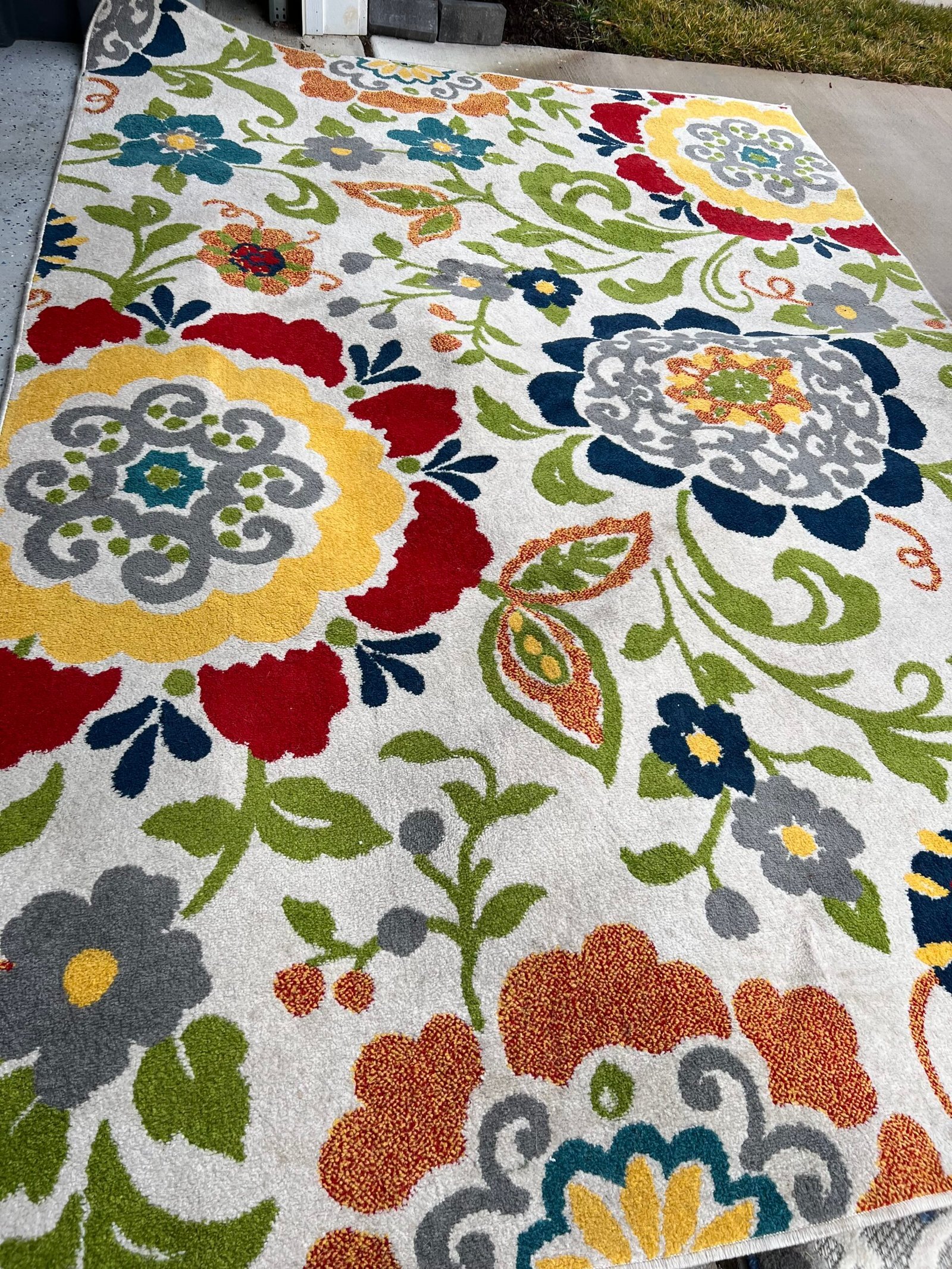
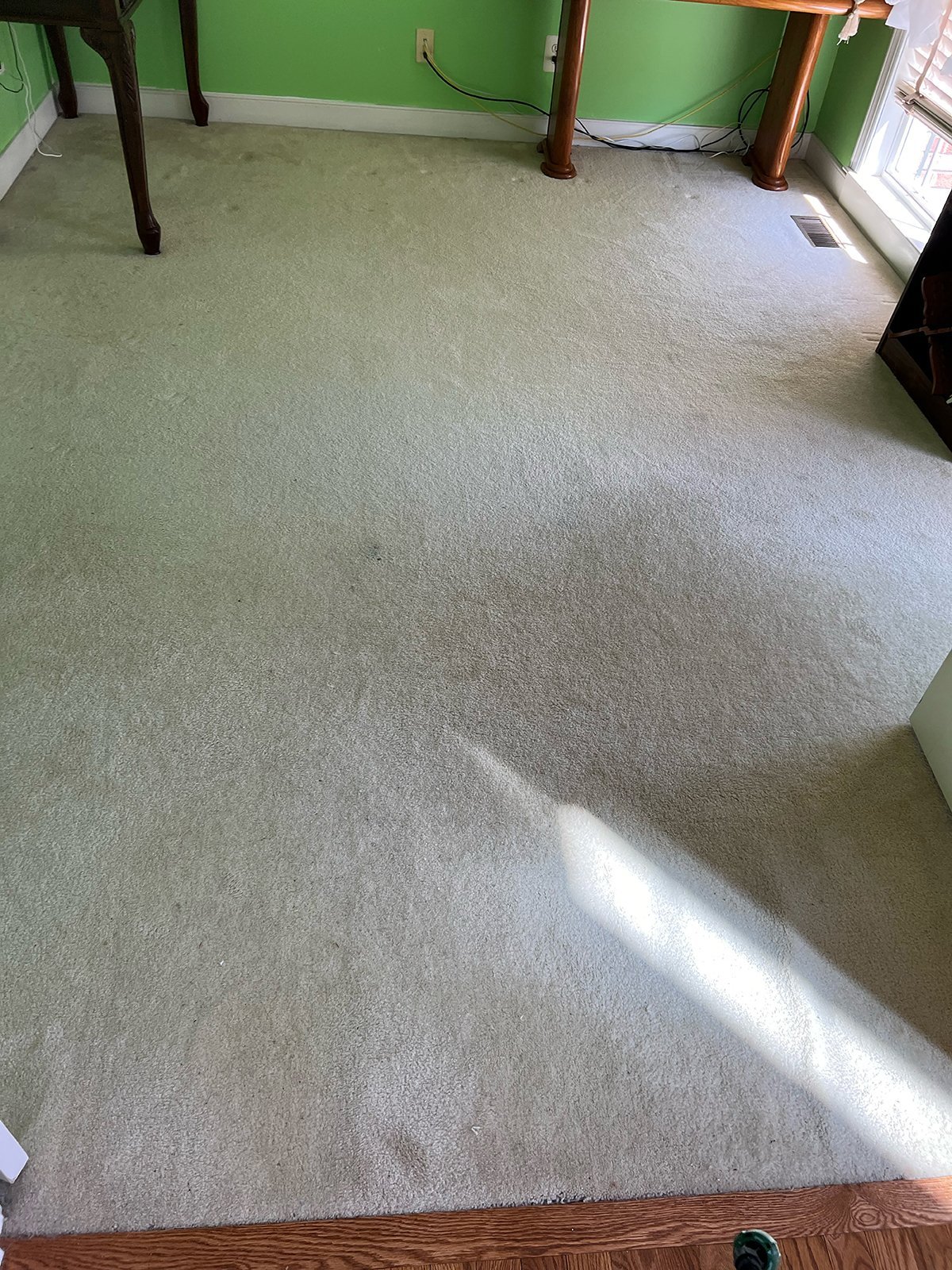
Real jobs in Northern Virginia homes, photographed on the day.
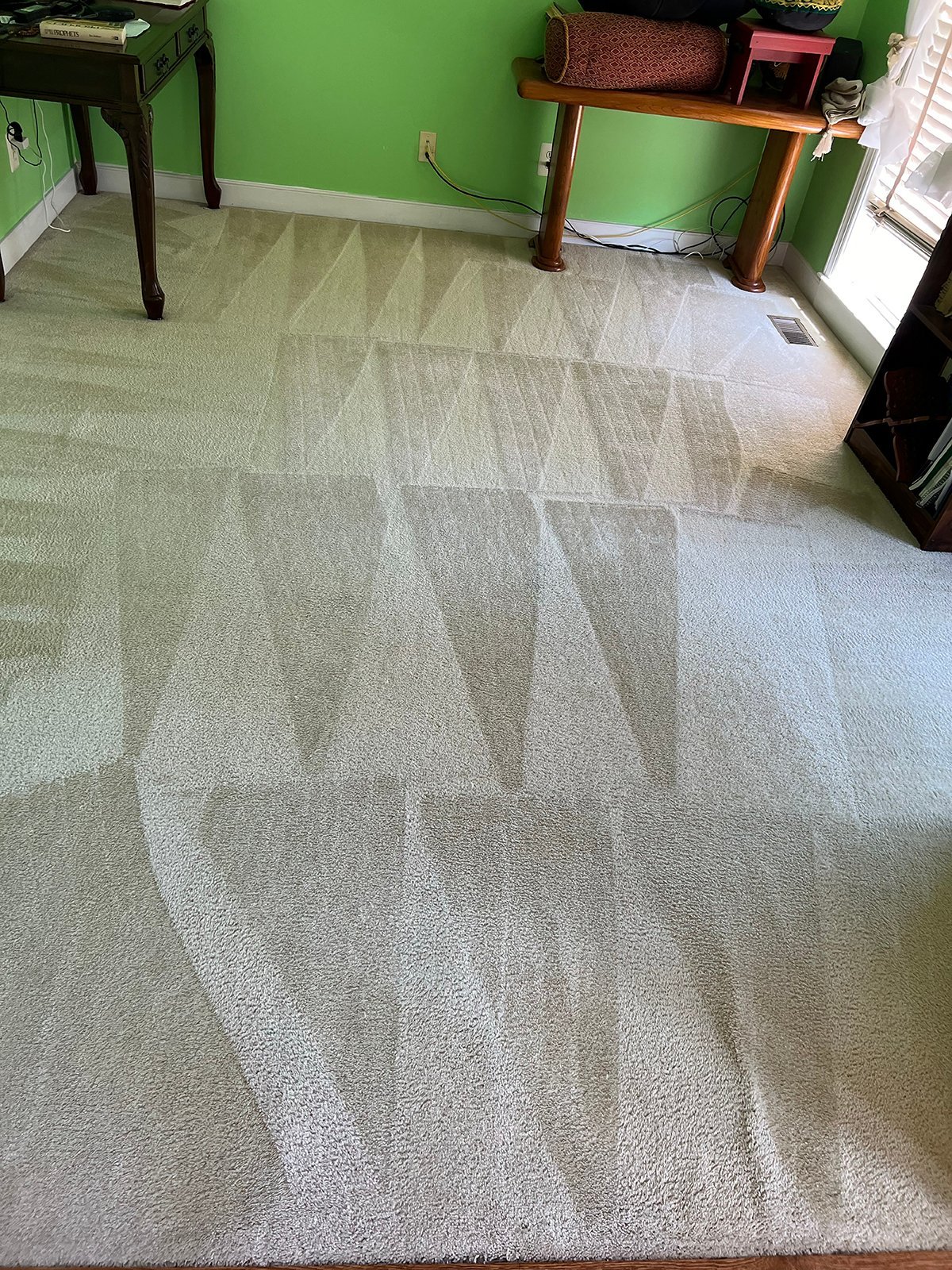
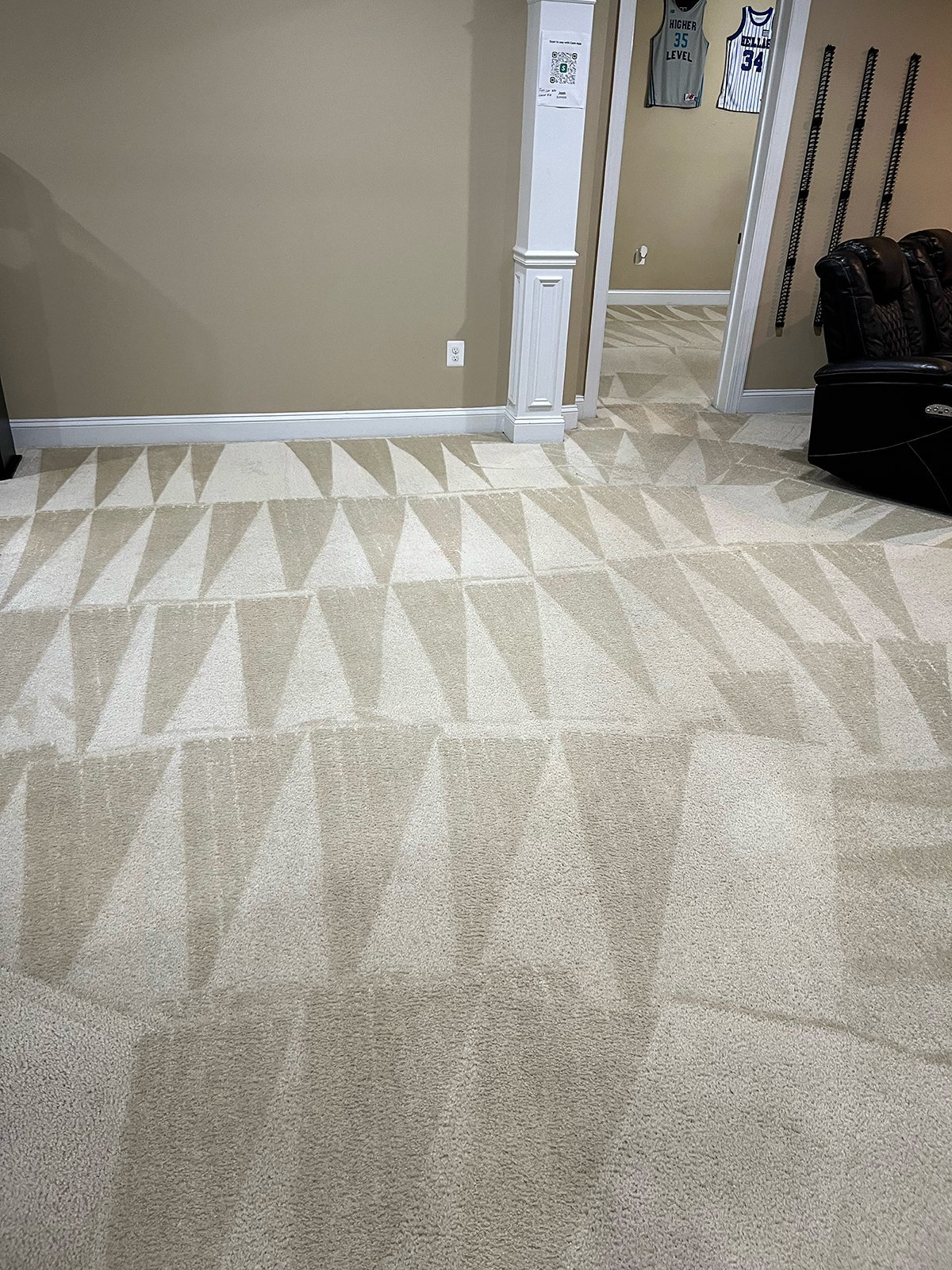
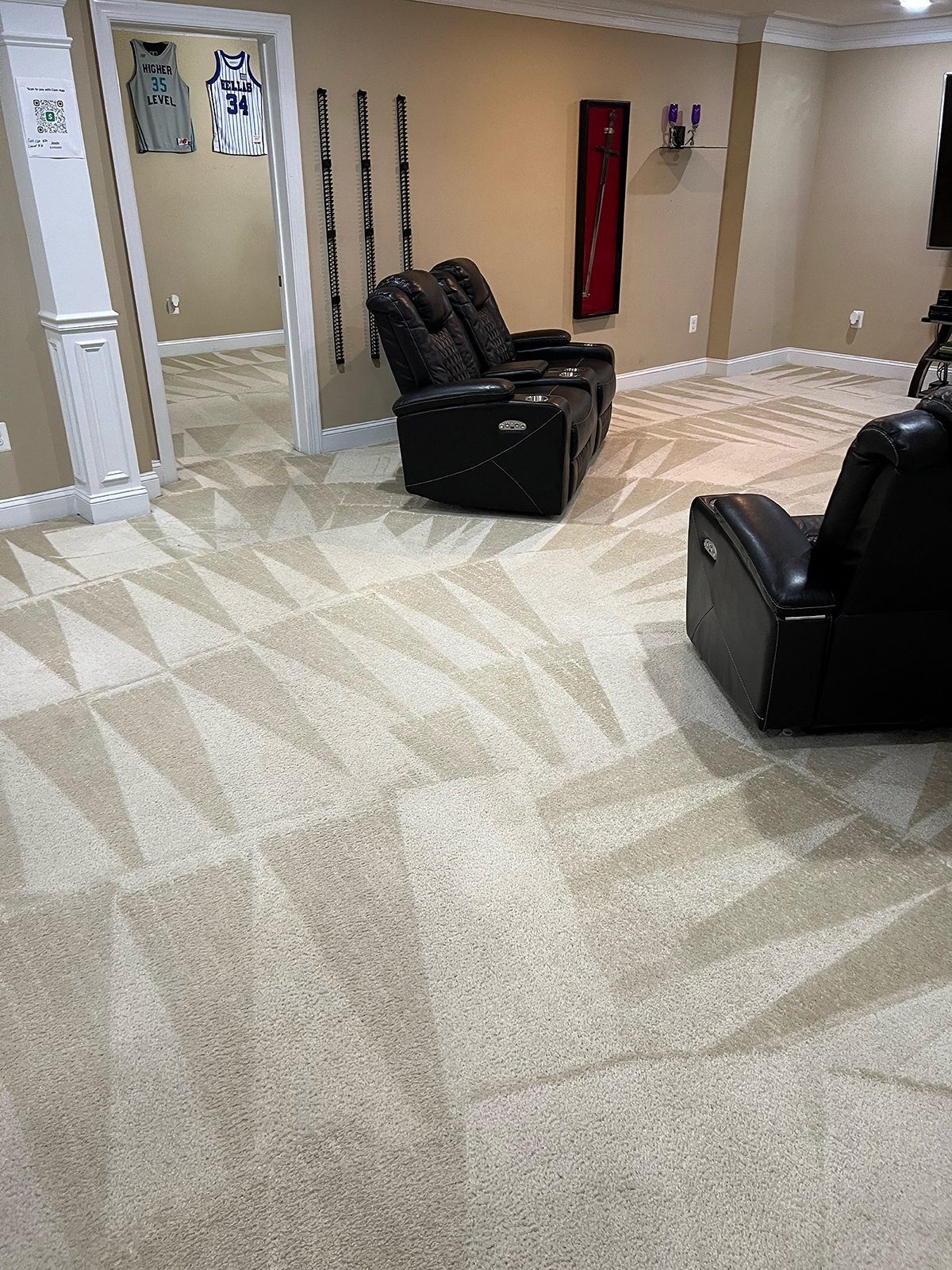
What this looks like
A real job, before and after. Drag the handle.
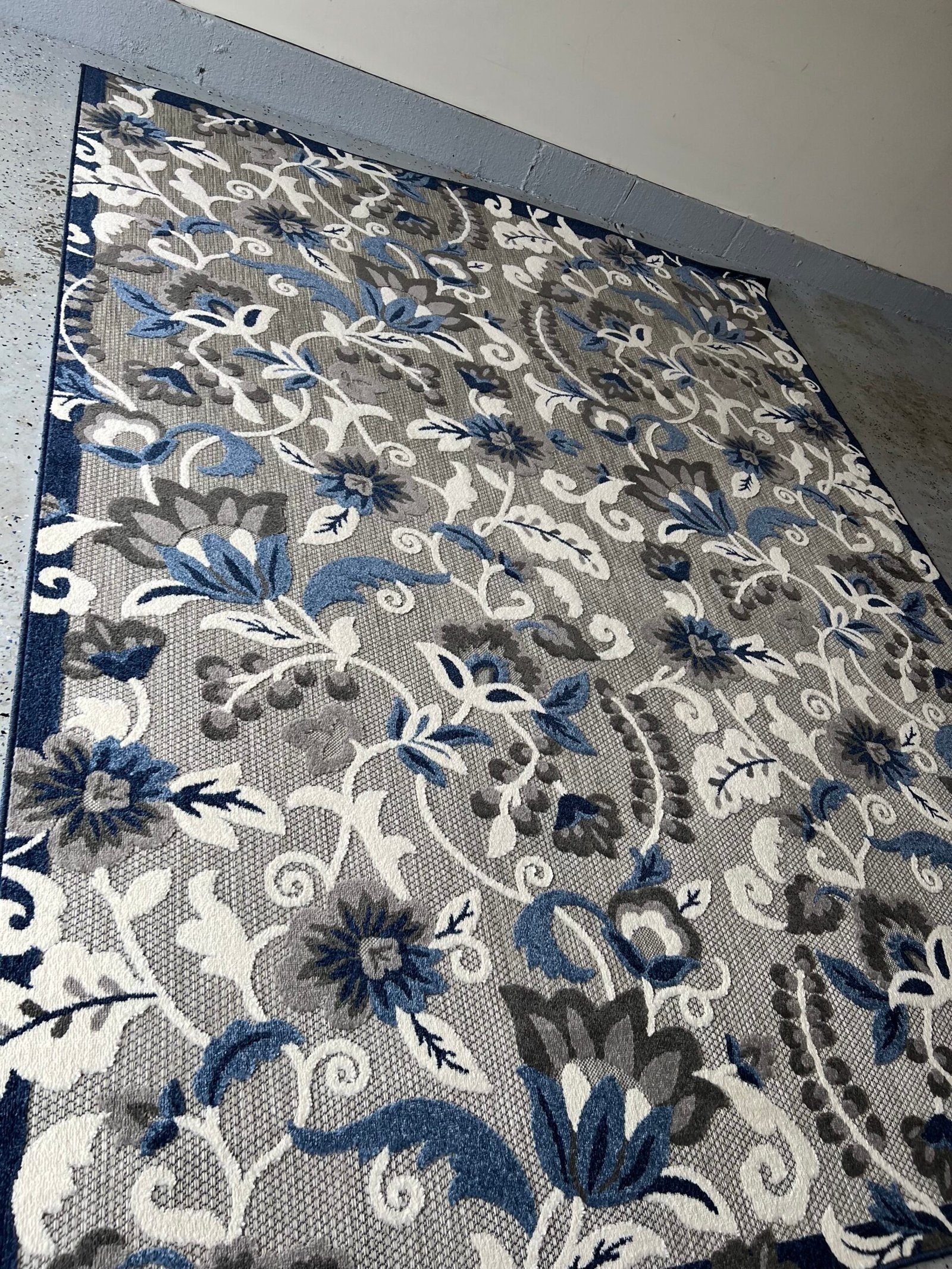
Drag the handle. The left half is where we came in.
Questions we get about this
The dogs track mud across the same rug every day in March. Is washing it pointless until spring ends?
Not pointless, but timing helps. If the rug is unbearable now we will wash it now, and if you can live with it, waiting until the ground firms up means the clean lasts far longer. In the meantime, let each round of mud dry completely and vacuum it out as a solid rather than working at it wet.
Why should I not wipe wet mud off the rug straight away?
Because wet clay moves in every direction you push it. Wiping spreads a paw print into a wide stain and drives fine particles down into the foundation where a vacuum cannot reach them. Dry mud, by contrast, breaks up and lifts out. It feels wrong to leave it sitting there overnight, but the rug comes out substantially better.
Can you collect rugs from a barn office or a guest cottage as well as the house?
Yes, provided we know before the truck is packed. Purcellville collections are grouped onto set days, so everything at one property is loaded in a single visit. Tell us how many rugs there are and roughly what sizes when you book, and we will bring the space for them rather than making a second trip out.
How far ahead do I need to book out here?
A bit further than someone in eastern Loudoun County would. Because we group this end of the area onto set collection and return days, the wait for a slot is usually longer than the wash itself. Once we have your rugs, the four to seven day turnaround applies exactly as it does anywhere else we work.
Will washing remove the smell from a rug that has had wet dogs on it all winter?
Usually, yes. Wet dog odor sits in the same place the soil does, in the foundation, and a full wash flushes both out. If a dog has actually urinated on the rug the odor is a separate problem with a separate treatment, because urine salts stay behind and reactivate whenever humidity rises. We check for that at pickup.
Are hooked and braided rugs safe to wash?
Generally yes, with more care and more hand work. A hooked rug depends entirely on its backing cloth, and a braided rug depends on the stitching holding the coils together, so both are handled gently while wet and dried flat without any tension on them. We check the stitching and the backing at pickup and tell you what we see.
Our rug is heavy village wool that has never been cleaned. Is it too far gone?
Almost certainly not. Heavy wool is the most forgiving material we handle, and rugs like that often improve dramatically because they have been holding soil for years rather than losing fiber. The dusting stage on a rug in that condition is long, and it is where most of the improvement comes from before water is ever involved.
Do you clean the rug pad or replace it?
We wash pads that are worth washing and tell you when one is not. Out here pads take a beating from grit and damp, and a pad that has gone hard, is crumbling at the edges or has flattened into the floor should be replaced rather than cleaned. Putting a freshly washed rug back on a failing pad wastes half the benefit.
Have a look at it in person
Walkthroughs are free and take about fifteen minutes. We agree the scope together and point out anything that will not come out before a hose comes off the truck. Over a decade in Northern Virginia and that has not changed.