
Rug Cleaning in Haymarket, VA
Three rugs can sit side by side in a showroom looking like variations on the same idea, and behave like three unrelated objects the moment they get wet. Rug cleaning in Haymarket starts with identifying what is actually in the pile, because almost every bad outcome we are called about traces back to that.
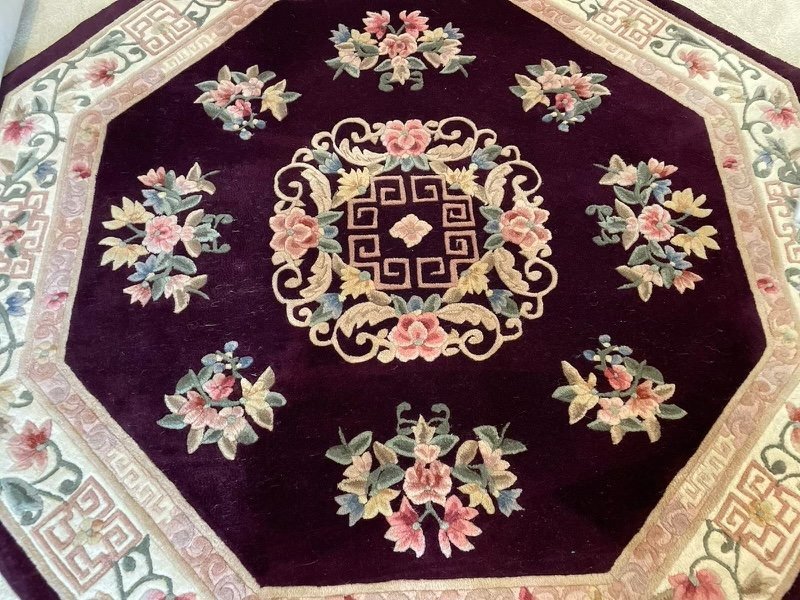
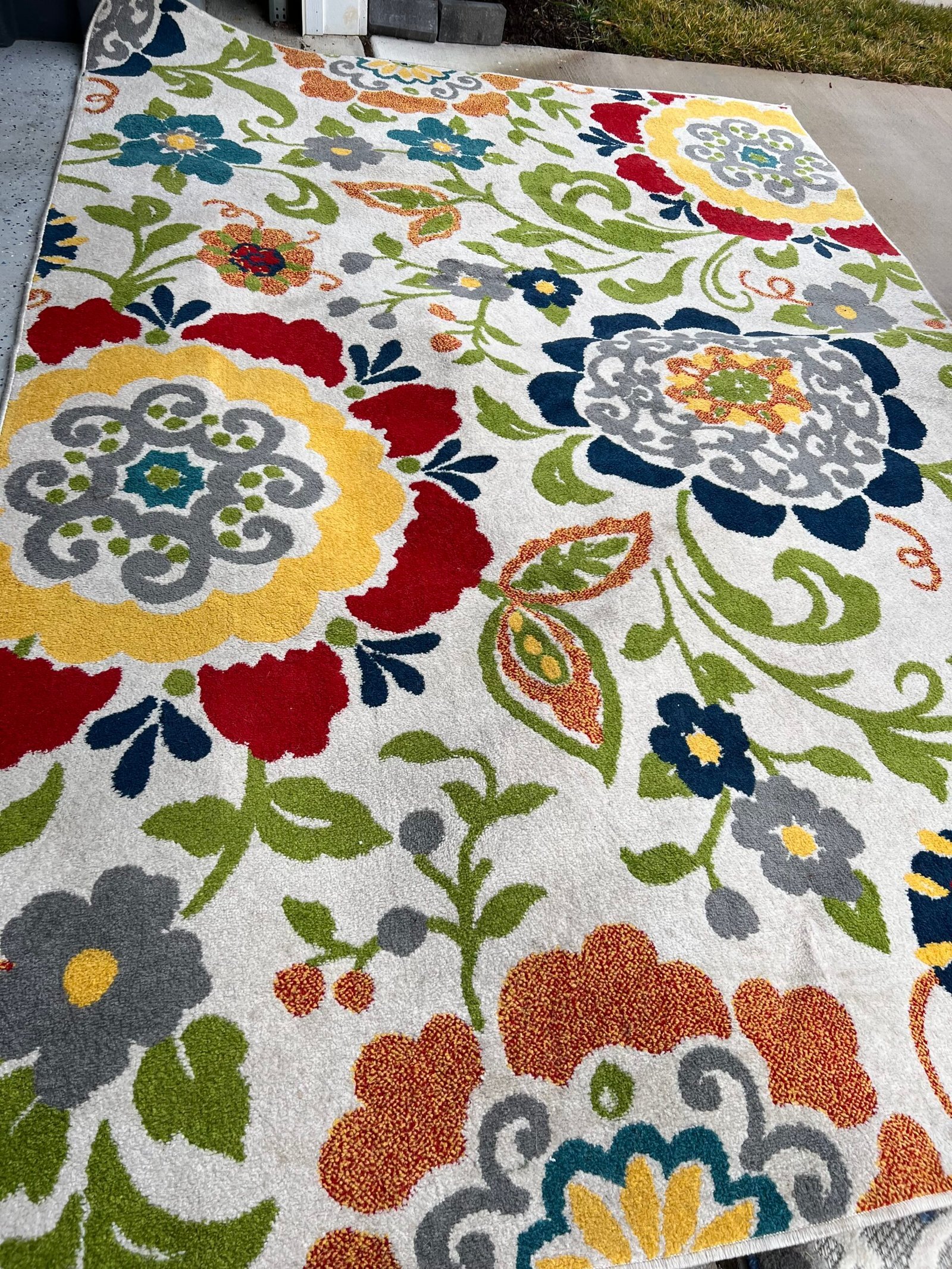
Three fibers, three completely different rugs
Wool is the most forgiving. Its natural oil holds dirt loosely on the fiber, it recovers from crushing, it resists soiling and it takes a proper wash better than anything else on a floor. What it cannot tolerate is heat and high alkalinity, which shrink and felt it.
Polypropylene, sold as olefin, absorbs almost no water, so water based spills sit on top of it and release easily. Its weakness is oil, which it holds on to, and heat, which flattens it permanently. Traffic areas on a polypropylene rug go matted rather than dirty, and no cleaning brings the pile back up once the fiber has been crushed under warmth.
Viscose, also sold as rayon, art silk, bamboo silk or banana silk, is the one that causes trouble. It is a plant cellulose fiber processed to shine like silk, and it loses most of its strength when it is wet. Water alone leaves a yellow or brown mark on it, the pile distorts under any pressure while damp, and the fibers can pull loose. It looks luxurious and it is the least durable material commonly sold as a rug.
How to tell what you have
- Wool feels springy, recovers when you press it and smells faintly of wool when damp.
- Polypropylene feels slick and plasticky and never quite warms to the touch.
- Viscose is unusually shiny, cool and soft, and shows a handprint the moment you brush it one way.
- Drop water on a hidden corner of viscose and it darkens and stays marked once dry.
- The back tells the rest: knotted, machine woven or tufted with a glued backing.
We do this check at pickup rather than guessing, because the wash changes completely depending on the answer. A viscose piece gets a low moisture approach, a great deal of hand work, and drying under close control. A wool piece gets a full wash. A polypropylene rug gets a full wash with no heat anywhere in it.
Big rugs anchoring open rooms
Rug cleaning in Haymarket, VA is dominated by one kind of piece, because the newer houses here are built with large open plan living areas, and the rug in the middle is often the only thing defining where the room begins and ends. Those pieces run ten by fourteen and larger, which changes two practical things: they take two people to move, and they soil unevenly. The half nearest the kitchen or the back door carries several times the soil of the far corner under a window, so the middle of the rug can look fine while the edge you actually walk across has gone dull.
That unevenness is another reason washing beats cleaning in place. A rug flooded and flushed as a whole comes back consistent across its whole area, rather than with a clean patch where somebody worked hardest.
Dogs on a large rug
A big rug in a house in 20169 with a dog collects three things. Hair, which binds into the pile and needs mechanical removal rather than suction alone. Dander and oil from the coat, which build an invisible film that dulls the fiber and makes the rug feel slightly greasy underfoot. And accidents, which soak straight through into the foundation and the pad, especially near a door.
Hair and film both come out in a wash. Urine does not come out in a wash alone, because the salts crystallize in the foundation and reactivate whenever the air gets humid, so that is handled as pet odor removal as a separate step before the rug is washed. If the accidents happened over a carpeted floor, pet odor removal in Haymarket usually has to include what is under the rug as well.
Washing by fiber, drying by fiber
Whatever the material, the sequence is inspection and a dye check, then dry soil removal, then washing, flushing, extraction and flat drying. The variables inside that sequence are what change. Wool is worked by hand with the pile in cool water with a wool safe shampoo, flushed until nothing colored comes off and the pH is back down, and dried flat with air over it. Polypropylene takes the same steps at a lower temperature and dries faster because the fiber holds no water. Viscose gets the least water any method allows and the most attention while it dries.
What washing does and does not change
A wash removes what is sitting on the fiber: grit, oil, dander, film and odor. It does not put back fiber that has been abraded away, it does not lift crushing out of polypropylene, and it does not remove a dye that has chemically bonded to the pile. Being clear about that at pickup is the difference between a rug that comes back better than expected and one that disappoints, and on most rugs the material sitting on the fiber is the overwhelming majority of what you are unhappy with.
Why drying flat is not optional
A rug drying under uneven tension shrinks more in one direction than the other, and the result is a piece that will not sit square in a room. Prince William County summers make this worse, since humidity slows evaporation, so drying gets more air and more time rather than more heat. Turnaround stays at four to seven days including collection and return.
While the floor is bare, it is an easy week for carpet cleaning in Haymarket on the bedrooms, upholstery cleaning on the sectional and hot water extraction on the stairs. Our routes cover Gainesville and Ashburn on the same days, so area rug cleaning in Haymarket rarely waits long for a slot.
Recent rug cleaning work
Real jobs in Northern Virginia homes, photographed on the day.
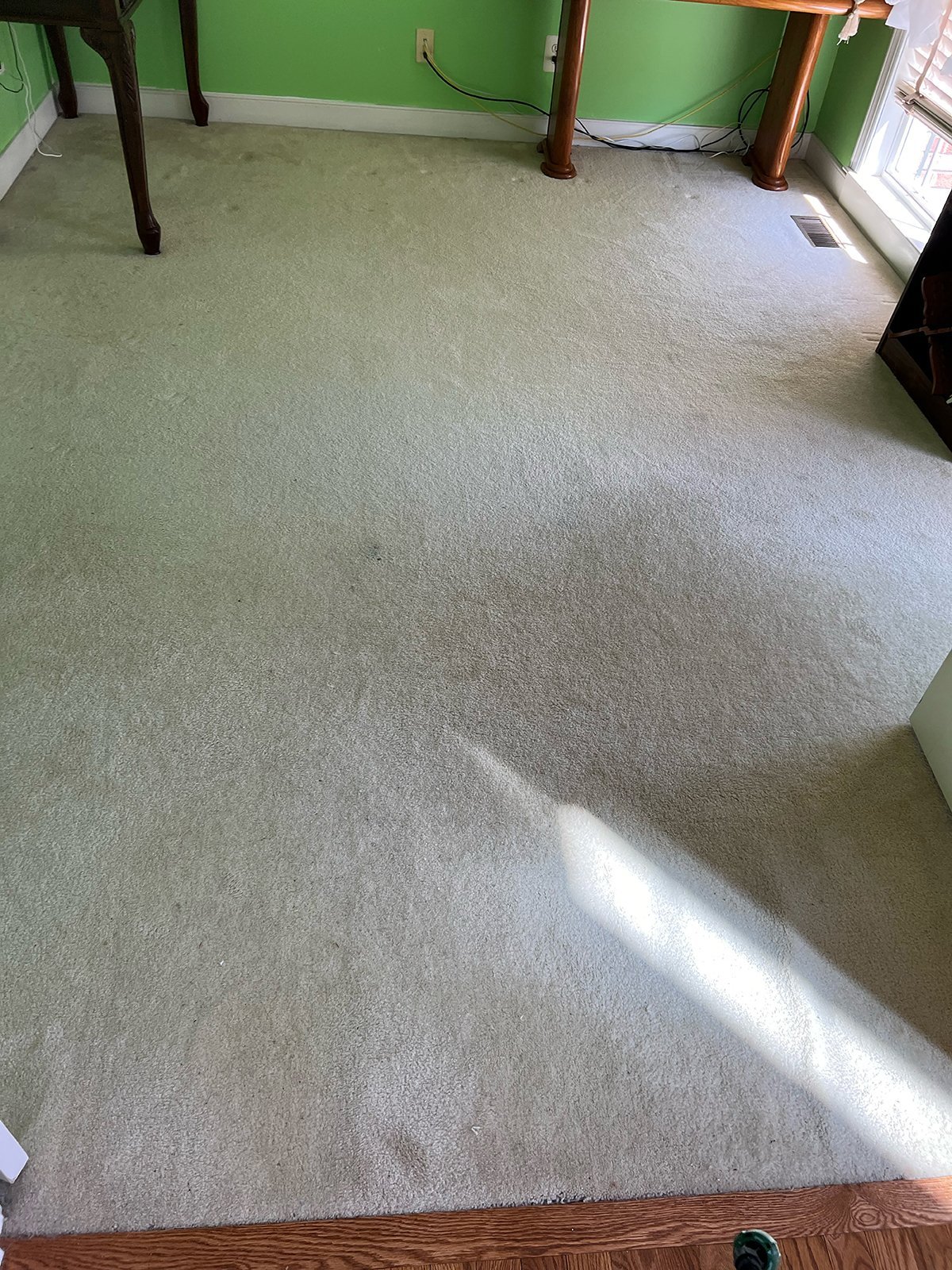
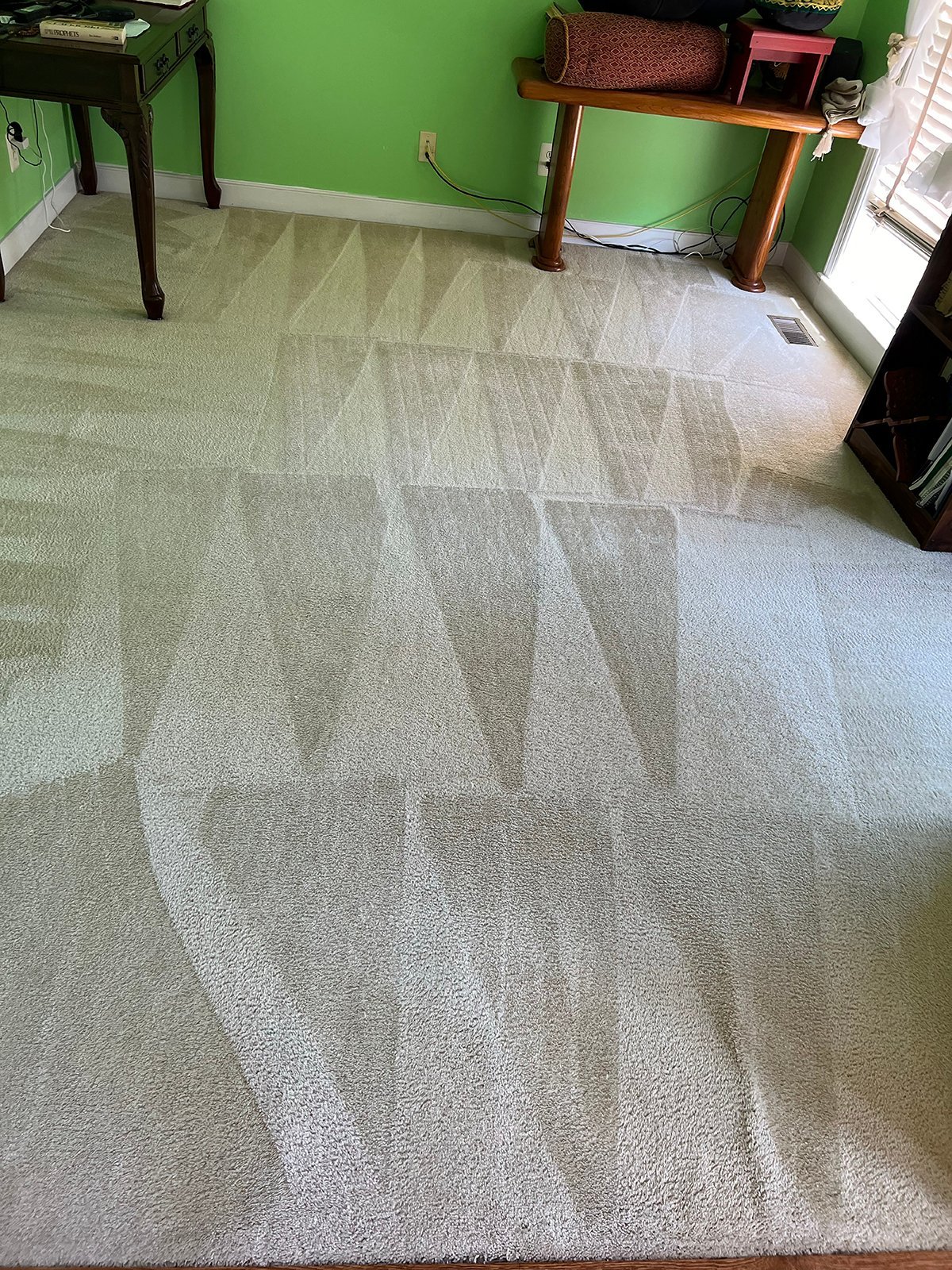
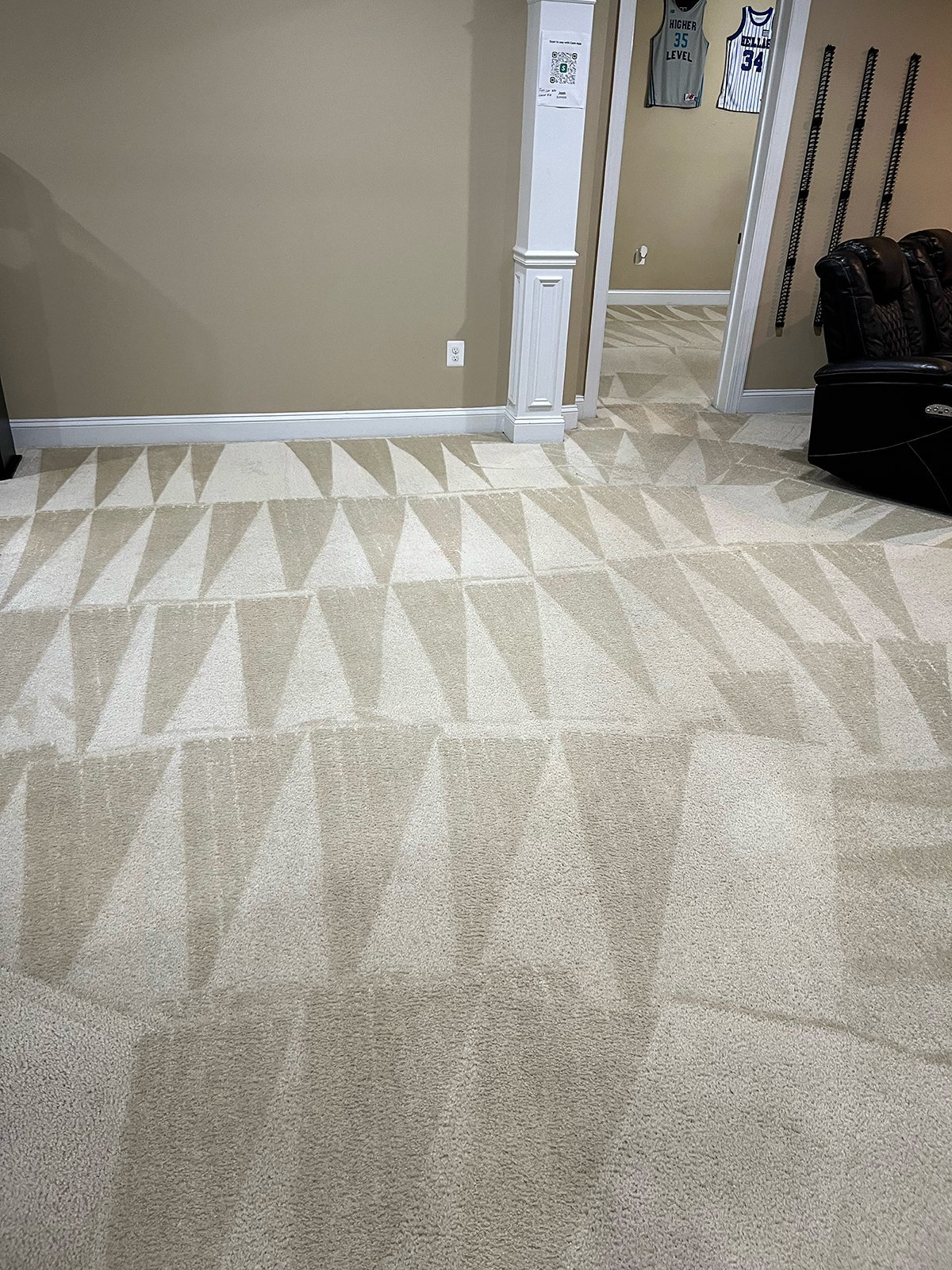
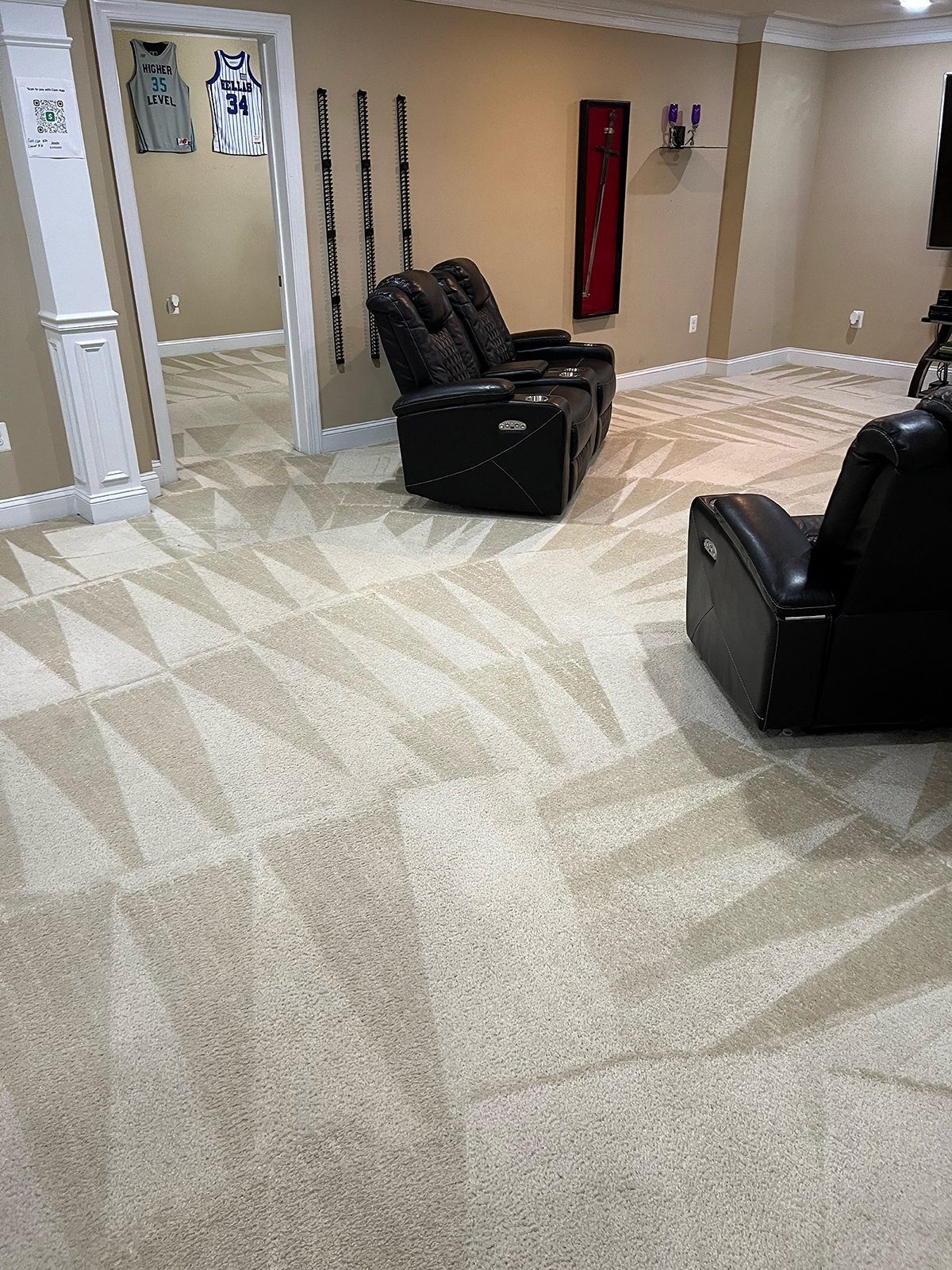
What this looks like
A real job, before and after. Drag the handle.
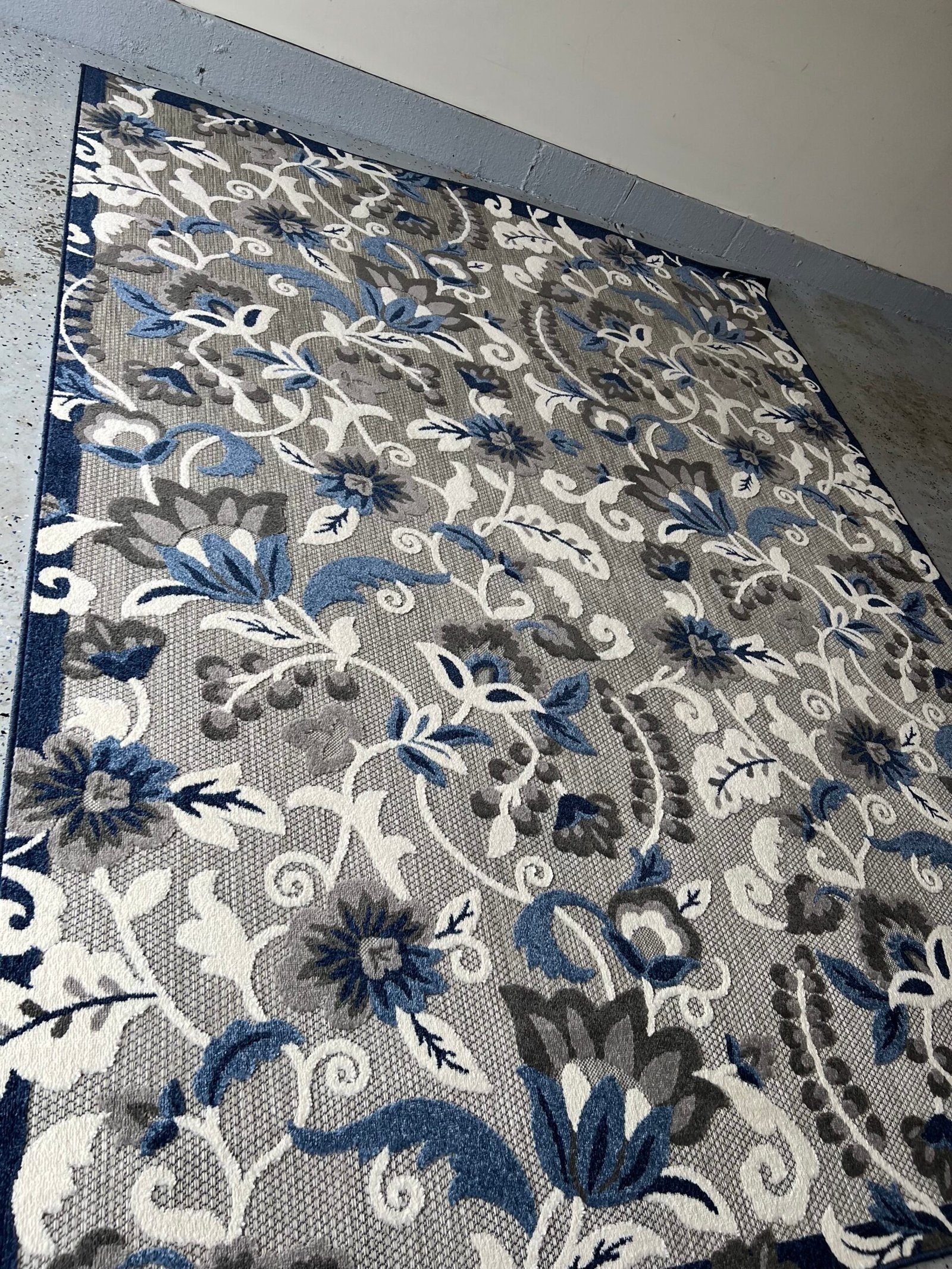
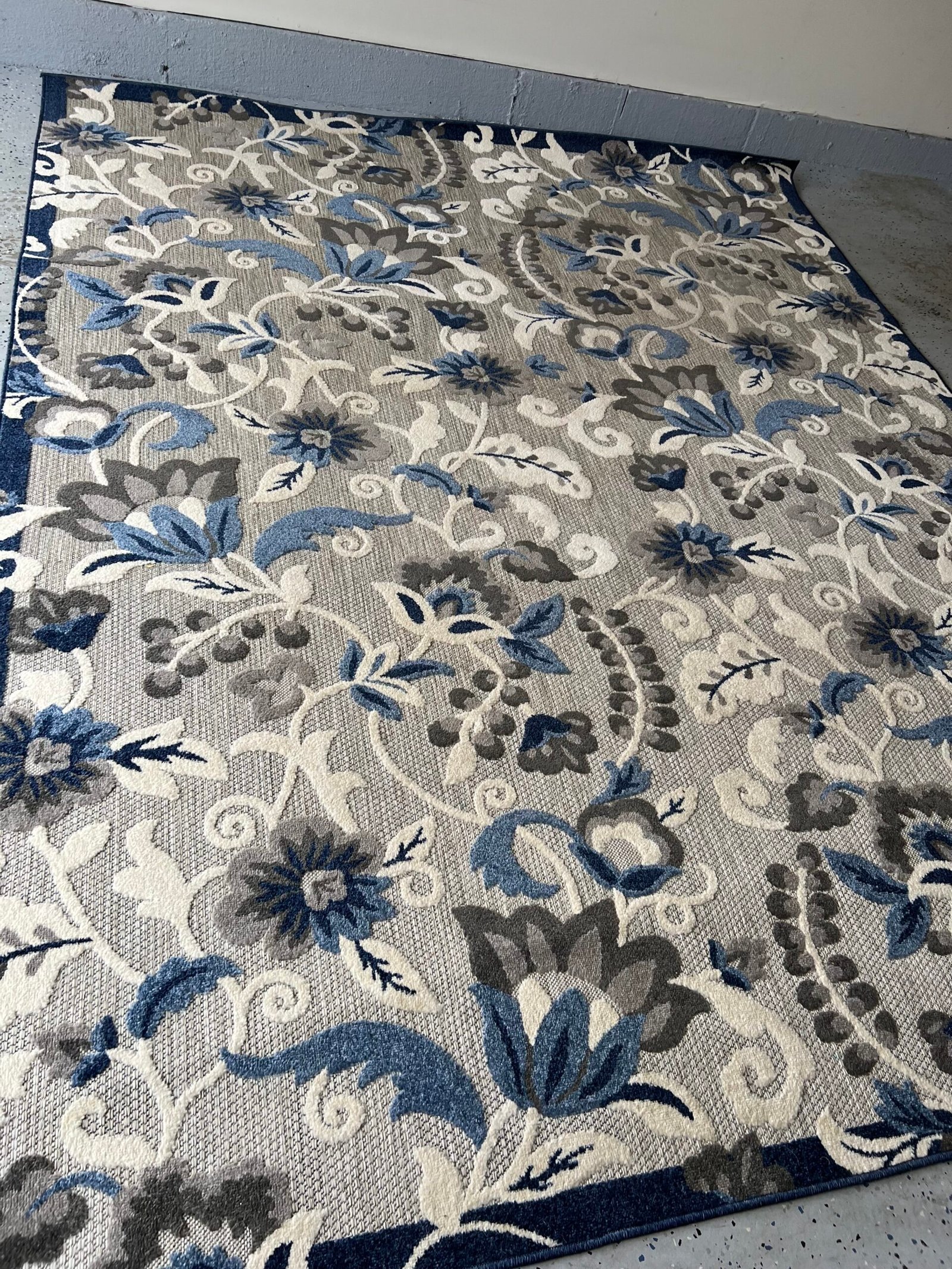
Drag the handle. The left half is where we came in.
Questions we get about this
How do I know whether our rug is viscose?
It will be unusually shiny for what it is, cool and slippery to the touch, and it shows every footprint and handprint as a change in sheen. The reliable test is a drop of water on a hidden corner: viscose darkens and often keeps a yellowish mark once dry. Labels calling it art silk, bamboo silk or banana silk all mean viscose.
Our viscose rug already has water marks. Can they be removed?
Sometimes improved, rarely erased. The mark is the cellulose fiber itself reacting to water rather than a substance sitting on top of it, so there is nothing to lift out. We can even out the appearance and clean the rug overall, but we will tell you honestly at pickup what we expect to achieve rather than promise it will disappear.
The middle of our big rug looks fine but the kitchen end looks dull. Can you clean just that part?
We do not clean part of a rug, because a partial clean leaves a visible boundary that is worse than the original problem. The rug is washed whole so the appearance comes back consistent across the full area. Uneven soiling like yours is normal on a large rug in an open plan room and it evens out in the wash.
Will washing fix the flattened path across our polypropylene rug?
Only partly. Polypropylene crushes permanently when pressure and warmth combine, and once the fiber has deformed there is no way to bring the pile back up. Washing removes the soil and oil that make a matted path look darker, which helps, but the physical flattening stays. Rotating the rug periodically is the practical prevention.
How much dog hair actually comes out?
More than most people expect, because a great deal of it is not on the surface at all but woven down among the yarns where a vacuum has no grip. Hair is removed mechanically during the dry dusting stage, before water is involved. Wet hair mats and becomes far harder to extract, which is another reason dusting comes first.
Can you move the furniture off a fourteen foot rug for us?
We move what two people can safely carry, and we will always help lift a sofa or a table off the rug so it can be rolled. Anything very heavy, a full bookcase, a piano or a loaded cabinet, needs to be dealt with before we arrive. Clearing the rug beforehand also makes the pickup itself much quicker.
Should a large rug be rolled or folded to leave the house?
Rolled, always, with the pile facing inward. A fold puts all the stress along a single line, which is where a foundation cracks and where a permanent ridge forms. Rolled, that stress spreads across the whole rug. A ten by fourteen rolls into something two people carry comfortably through a standard doorway.
How often does a large family room rug need washing?
In a Haymarket house with dogs and an open plan layout, generally every twelve to eighteen months. The deciding factor is not how it looks from standing height but how much grit is riding in the foundation, since that is what abrades the fiber. Vacuuming both sides and rotating the rug twice a year stretches the interval noticeably.
Have a look at it in person
Walkthroughs are free and take about fifteen minutes. We agree the scope together and point out anything that will not come out before a hose comes off the truck. Over a decade in Northern Virginia and that has not changed.