
Rug Cleaning in McLean, VA
A hand knotted rug is two structures living in one object: a foundation of cotton or wool under tension, and thousands of knots tied onto it that you read as pattern. Rug cleaning in McLean starts from the assumption that the pile is what soils and the foundation is what fails.
Two structures in one rug
Part the pile on a hand knotted piece and you can see warps running the length of the rug and wefts crossing them, both under tension, both usually cotton. Every knot is tied around a pair of warps and then cut to length. That foundation is the part nobody looks at and the part that decides whether a rug survives washing. McLean holds the highest concentration of hand knotted and wool pieces we see anywhere in Fairfax County, much of it sitting in formal rooms in 22101 and 22102 where it has been quietly aging for thirty or forty years.
Two failures hide down there. Dry rot, where cotton warps have been damp repeatedly under a planter or against an exterior wall and have lost tensile strength, so they crack rather than bend. And moth damage, which begins low in the pile in the dark under furniture where nothing moves, and stays invisible from above until the wool lifts out between your fingers. Both change what can be done with a rug, and both need finding before it goes near water.
Knot density is worth knowing too, because it tells you how much handling a rug tolerates. A finely knotted piece with a thin foundation is more delicate wet than a coarse village rug with a heavy one, even though the fine piece looks more substantial on the floor.
Five steps, and the order is not negotiable
- Inspect and dye test: dry rot, moth activity, old pet damage, previous repairs and reweaves.
- Dust it out dry, until the foundation stops giving up soil.
- Hand wash with the pile, cool water, wool safe shampoo.
- Rinse, then extract once the water clears and the pH settles back down.
- Dry flat with air moving, then groom the pile and comb the fringe.
Each step exists because of the one before it. Skip the dusting and the wash turns dry soil into mud inside the weave. Skip the rinse and you leave shampoo residue behind, which attracts soil faster than the original dirt ever did. Skip flat drying and the foundation shrinks unevenly across its width, and the rug never lies straight again.
Dye testing every color, not just the reds
Before anything gets wet across the whole rug, a hidden corner of each color in the design is wetted and blotted with white cotton. Reds and deep blues in older pieces are the usual movers, but an oxidized brown or a later repair yarn can be just as loose. Antique rug cleaning in McLean turns on this test more than on any other single thing, because a piece that fails it is not washed the way a stable one is. The wash gets shorter. The water gets cooler. The rinse gets faster, and air goes onto the rug sooner so no color has time to travel across a boundary.
If a dye moves badly enough, we say so before the rug leaves the house and let you decide. Owners here ask careful questions, and the honest answer to some of them is that a particular rug is better left slightly soiled than washed hard.
Dry soil first, water second
A wool rug of any size carries far more dry soil than people expect, packed down at the base of the knots where a household vacuum has no chance of reaching. A room sized wool piece can surrender several pounds of grit before the water is even mixed. Grit is abrasive. It cuts wool fiber every time somebody crosses the rug, which is why a piece that is dusted on a schedule outlasts one that is only ever surface cleaned.
Dusting runs 20 to 45 minutes per rug depending on weight and pile depth, and it is finished when the rug stops releasing, not when the clock says so. Only then does it go to water.
The wash, the rinse and the flat dry
Washing is done by hand, worked in the direction the pile lies, with cool water around 80 to 90 degrees Fahrenheit and a shampoo mild enough for wool. Heat and high pH are what felt and shrink wool, and neither belongs anywhere near a hand knotted rug. Flushing carries on until what comes off the rug is clear and the acidity has returned to where wool is comfortable, and only then is the rug extracted and set out flat with air moving over it.
One thing owners notice on delivery: wool that has been washed correctly regains its luster. Soil dulls the fiber surface and flattens the way light comes off it, so a rug people had written off as faded frequently comes back reading two shades deeper without a single thing having been done to the dyes.
Grooming and fringe
Once dry, the pile is groomed so it lies in one direction again and the fringe is combed out by hand rather than worked with anything mechanical. Fringe is the foundation warps continuing past the last row of knots. It is structural, not decoration, and it is easy to shorten permanently with the wrong tool.
Pickup and delivery in McLean, VA
Rugs are rolled pile side in, wrapped and carried out. Turnaround is four to seven days, and the size of the house does not change that. Oversized pieces take two people and a cleared path to the door, so tell us the dimensions when you call. If the room is getting attention while the rug is out, that is the natural moment for carpet cleaning in McLean or for upholstery cleaning in McLean on whatever furniture sat on it.
Wall to wall wool gets hot water extraction at a mild pH for the same reason the rugs do. Lined drapery in the same formal rooms is handled as curtain cleaning, and anything a dog left under the pad is a pet odor removal question rather than a washing one. We collect in 22106 on the same runs that serve Great Falls, Tysons and Herndon, so scheduling rug cleaning in McLean rarely takes more than a few days of notice.
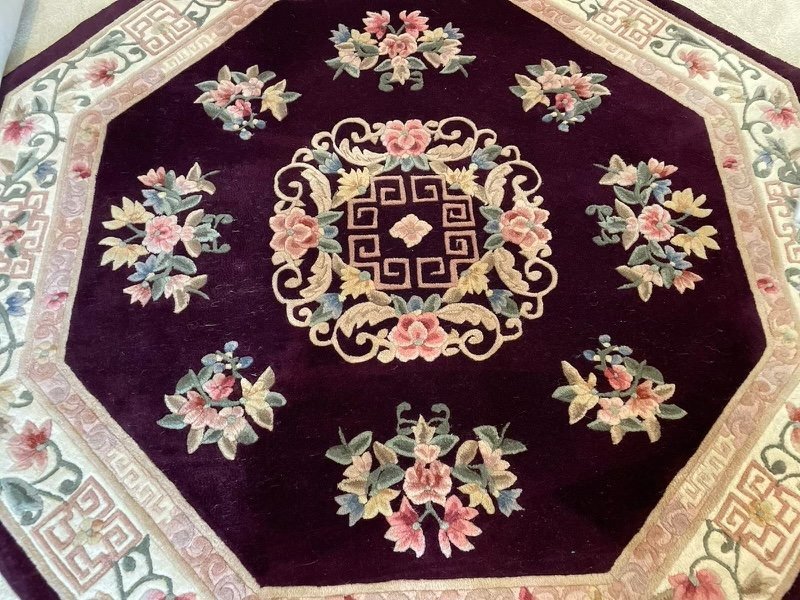
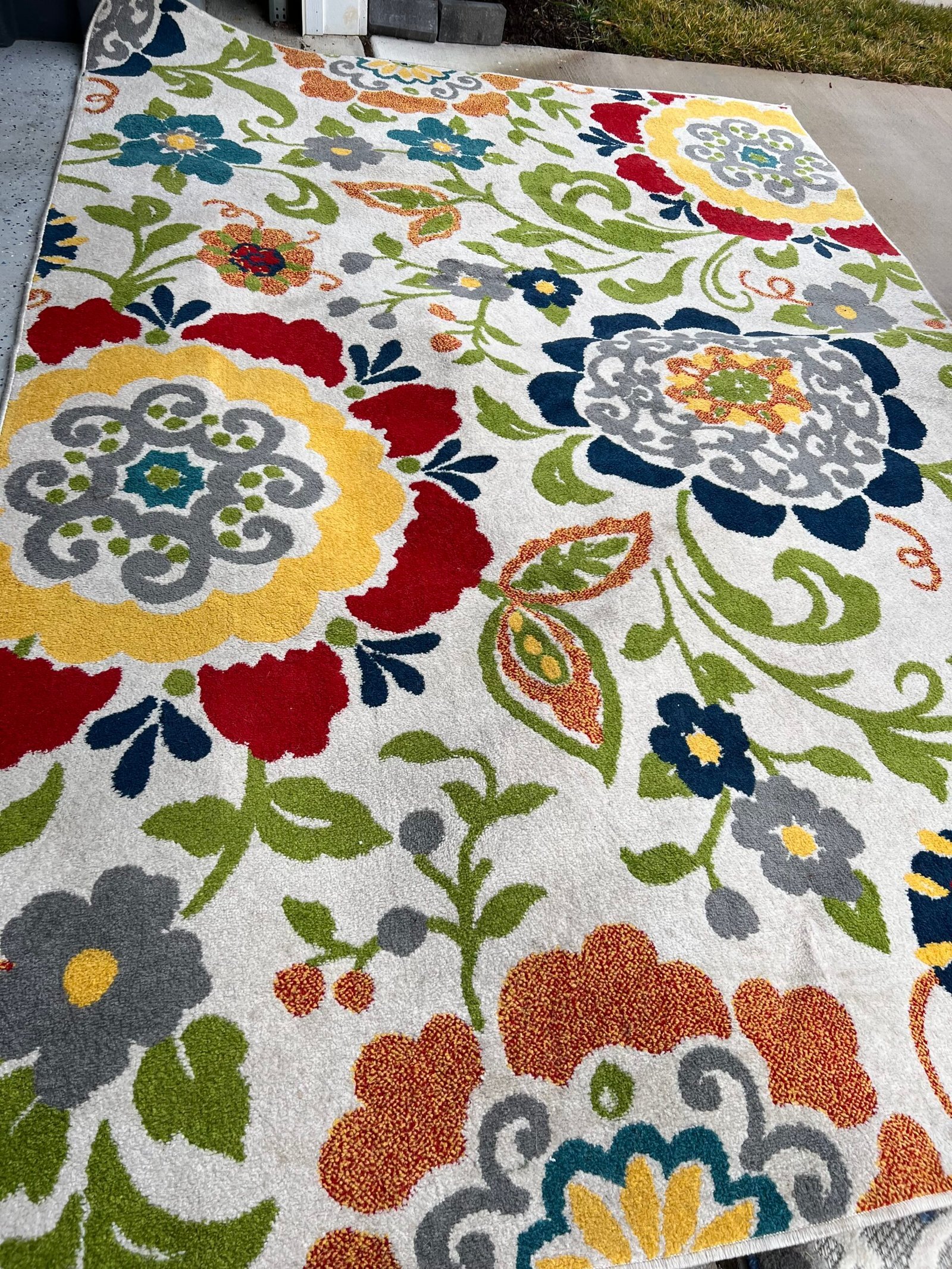
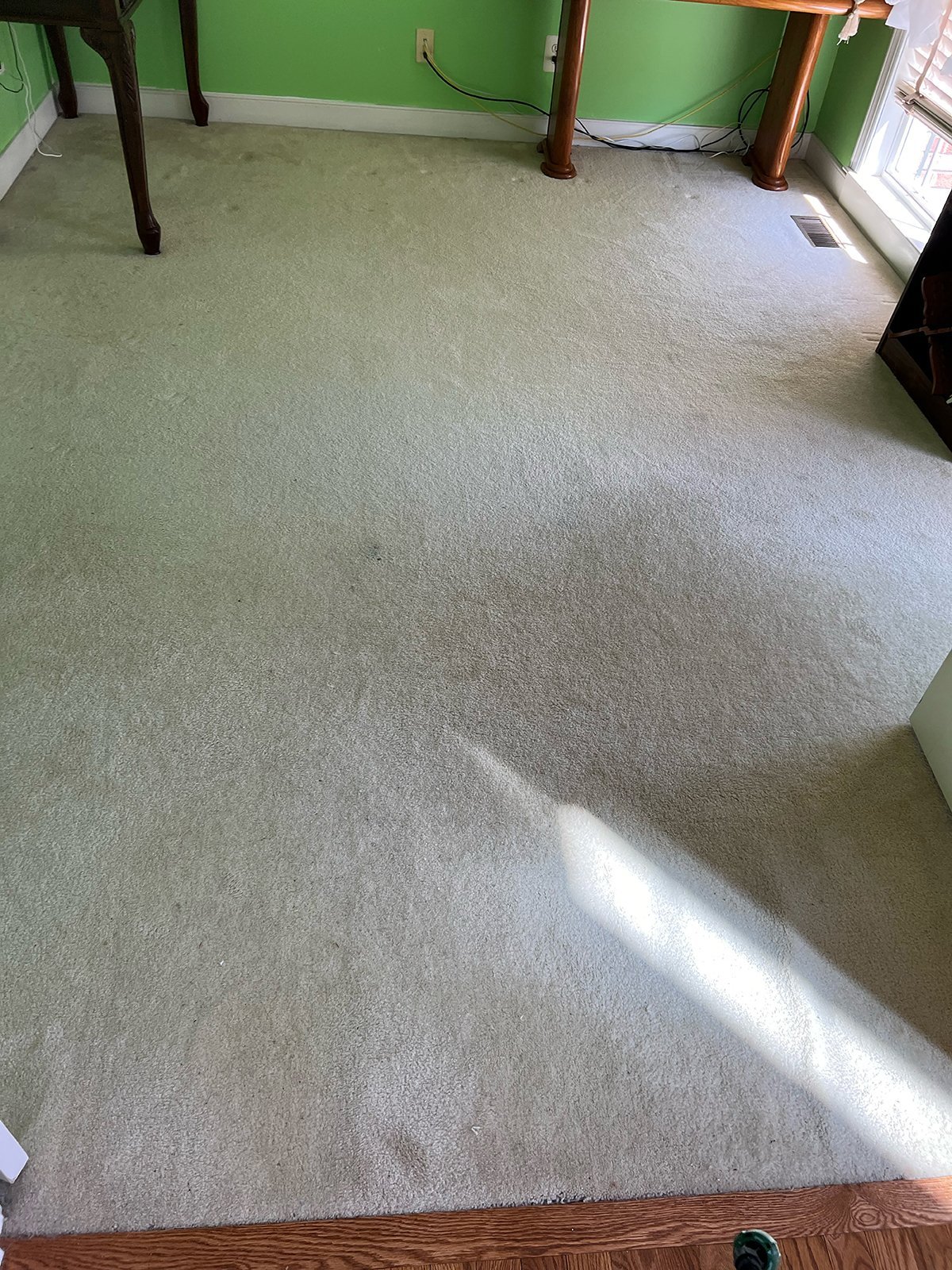
Recent rug cleaning work
Real jobs in Northern Virginia homes, photographed on the day.
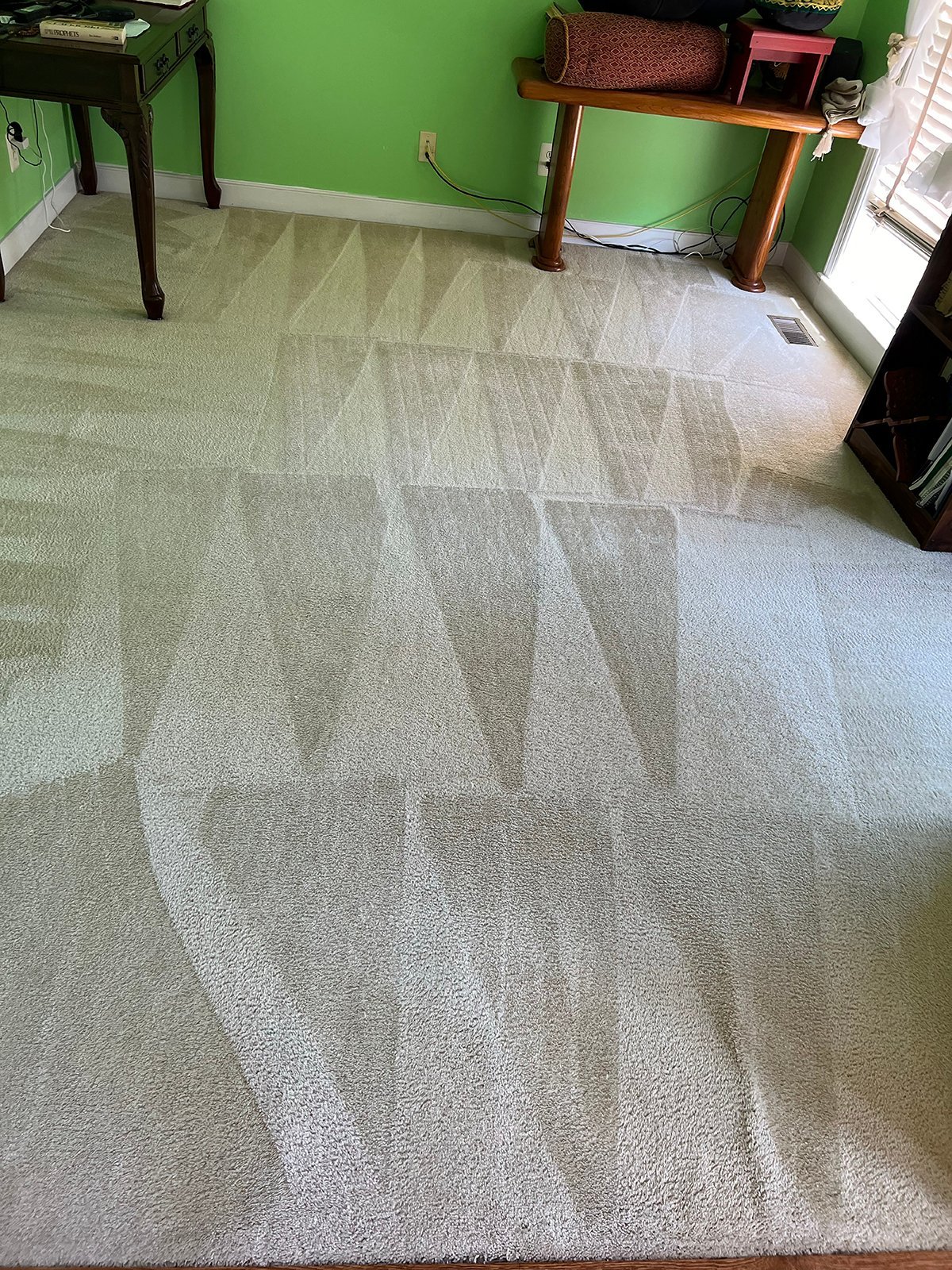
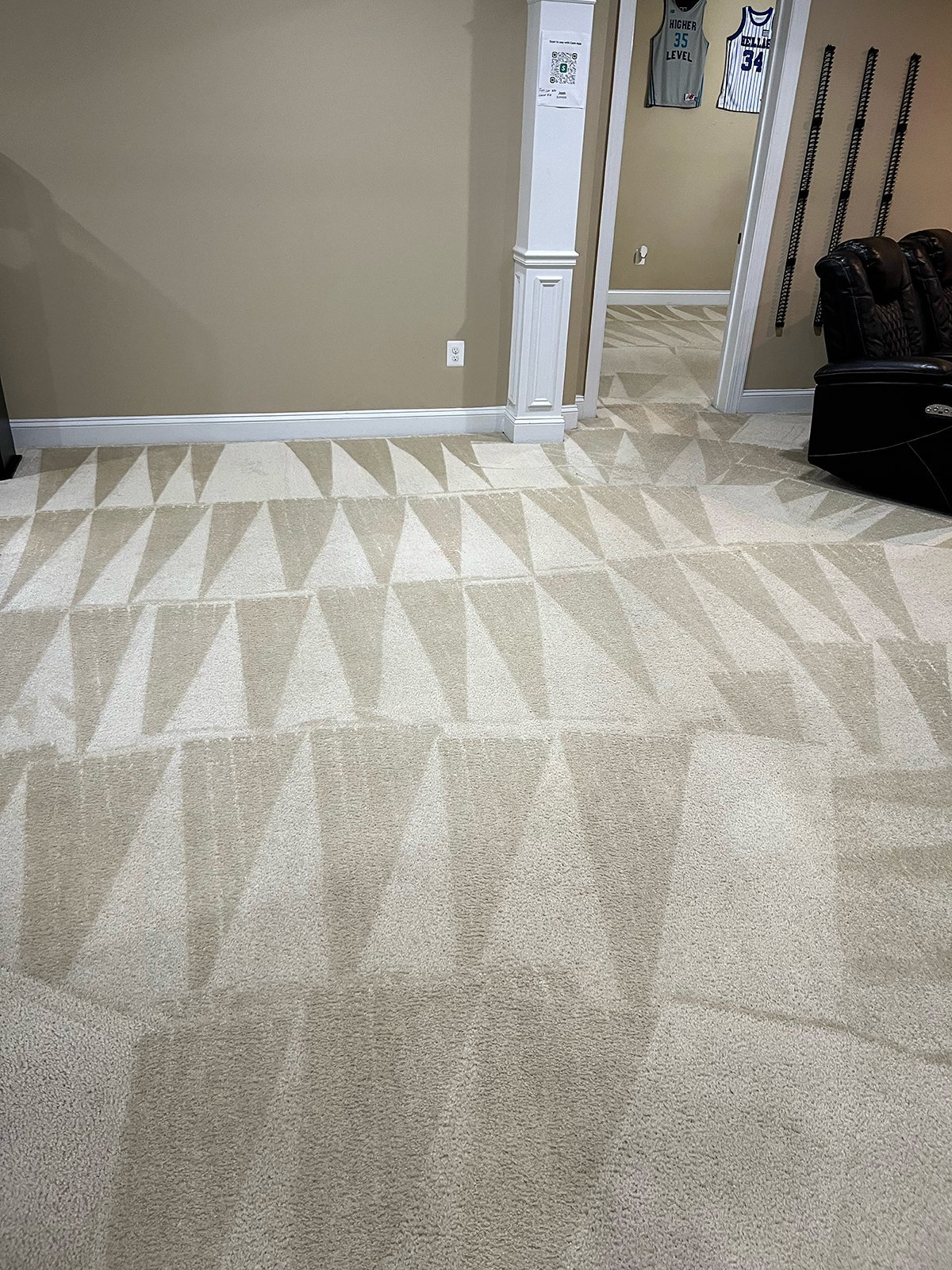
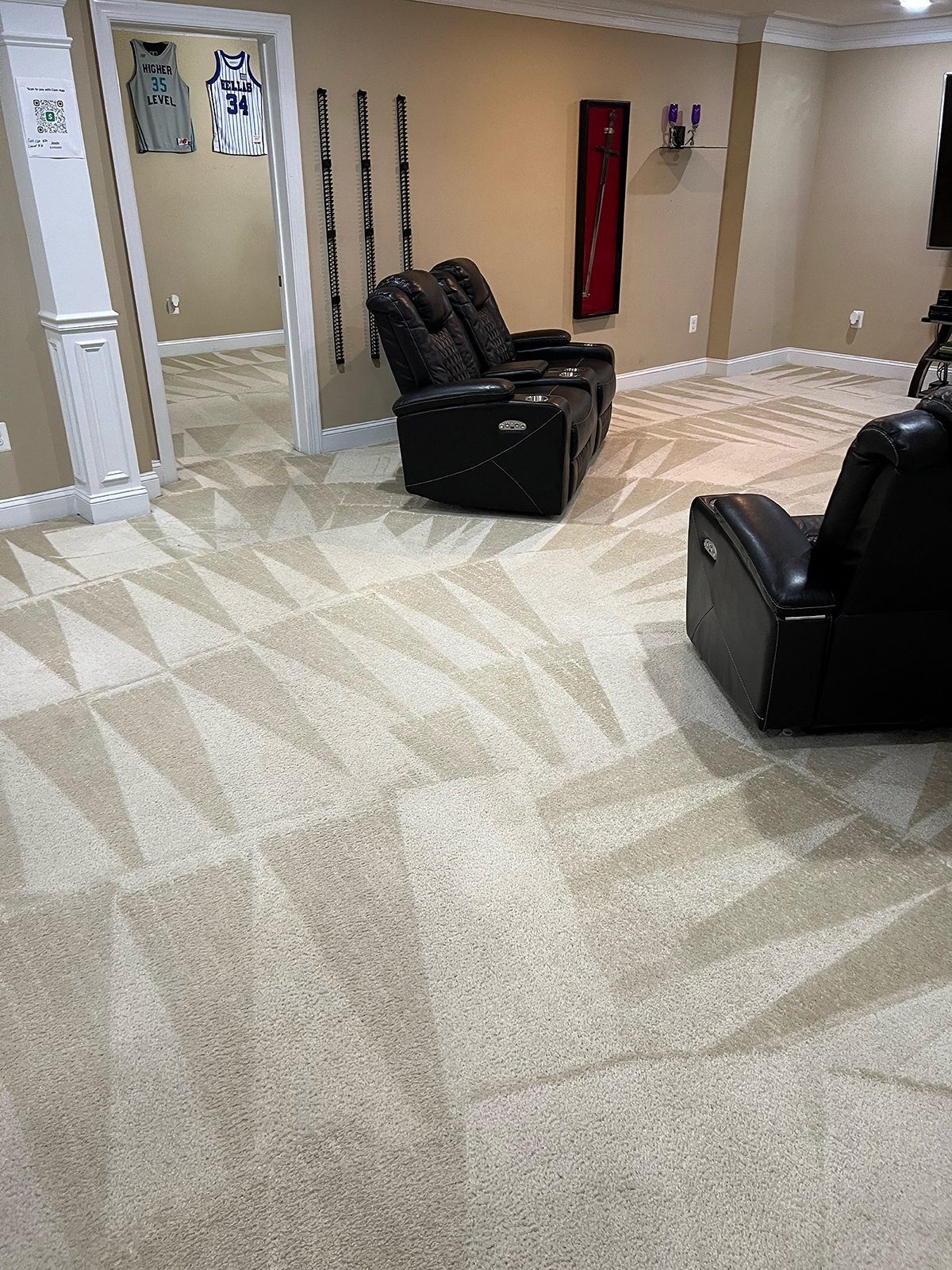
What this looks like
A real job, before and after. Drag the handle.
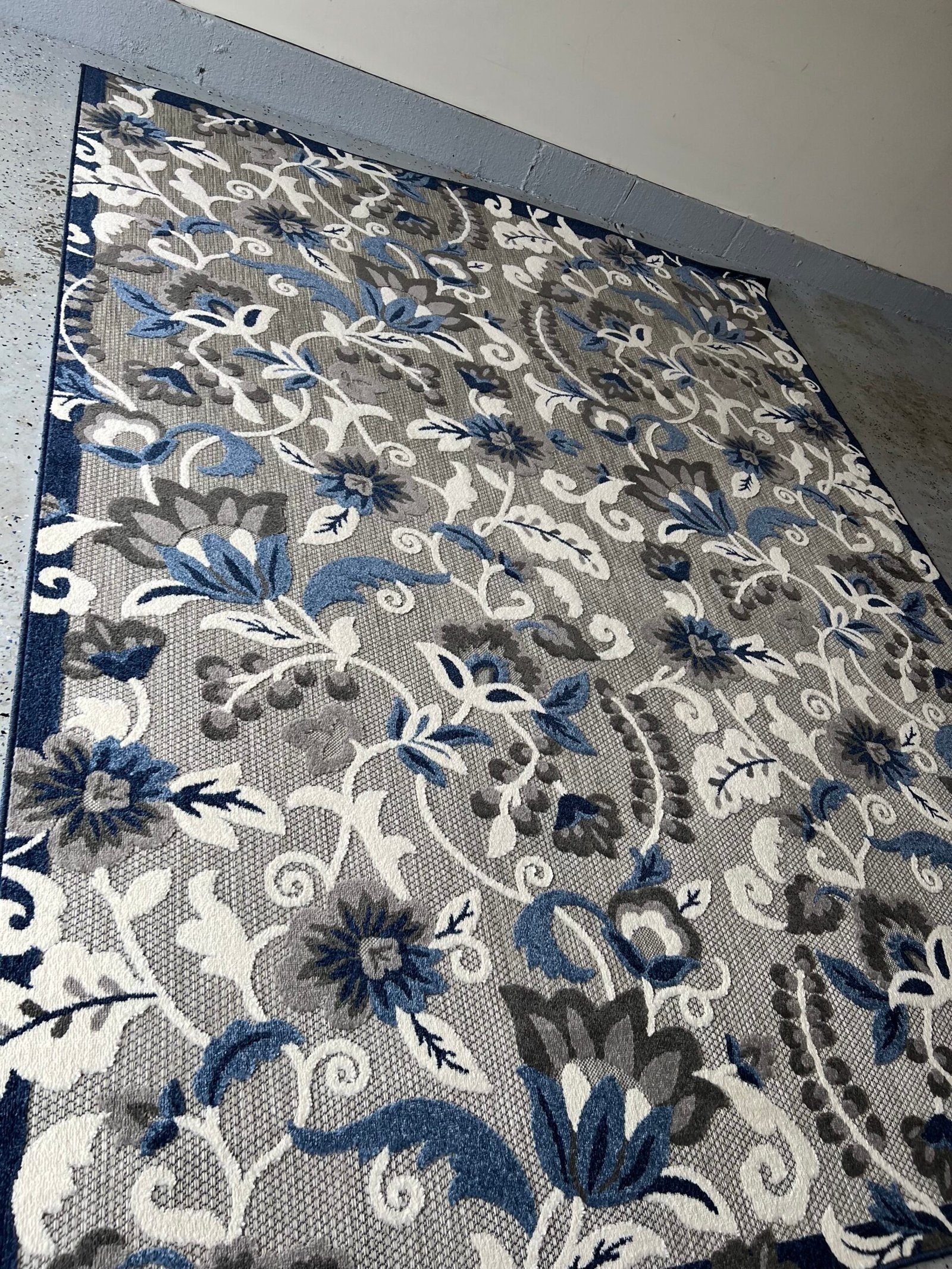
Drag the handle. The left half is where we came in.
Questions we get about this
Why can a McLean rug not be cleaned in the room it sits in?
Because a hand knotted rug has to be flushed and rinsed, and you cannot rinse a rug lying on a wood floor. Cleaning in place puts a small amount of solution on top of a foundation packed with dry soil and leaves both behind. Off site, the rug is dusted first, washed through, flushed until the runoff is clear and dried flat under controlled air.
How do you find moth damage that we have not noticed?
By looking underneath and at the parts that never move. Moth larvae feed in the dark, so damage shows up under a sofa leg, along a wall or beneath a chest, and from above it looks like the pile is simply flattened there. Parting the wool by hand reveals knot heads gone and bare foundation. We photograph it and show you before washing.
Our rug has been in the same formal room for thirty years. Does it really need washing?
Usually yes, and in some ways more than a busy rug does. A quiet room still settles airborne dust into the pile, and that dust migrates downward and packs at the base. It looks fine from standing height because nothing has crushed the pile. Lift a corner and tap it and you will see what has been sitting inside the foundation.
What happens if a dye moves during the dye test?
The wash changes rather than stops. Cooler water, shorter contact time, a quicker flush and air on the rug sooner so nothing has time to migrate between two colors. If a dye is unstable enough that we do not believe a full wash is safe, we tell you that at the house and you decide whether to proceed.
Do you wash silk rugs from McLean homes the same way?
No. Silk has almost no elasticity when wet, it loses strength temporarily and it shows water marks that wool would hide. Silk pieces get less water, less agitation, tighter control over drying and far more hand work throughout. Foundations matter too, since a silk pile on a cotton foundation behaves differently from silk on silk.
Can you handle a rug that has already been repaired?
Yes, but we need to see the repair first. Reweaves and overcasting use replacement yarn dyed separately from the original, sometimes decades later, and that yarn is often the least stable color on the rug. We test it like any other color and treat the repaired area with more care than the field around it.
How is the fringe cleaned without damaging it?
It is washed with the rest of the rug and combed out by hand once dry. Fringe is the warp of the foundation extending past the knots, so it is structural. Aggressive brushing or a machine will shorten it, break individual warps and eventually let the end rows of knots loosen. Gray fringe often lightens with a proper wash and no additional treatment.
Will you pick up more than one rug at a time in McLean?
Yes, and it is the sensible way to do it. Most houses here have several, and washing them together means one pickup, one delivery and consistent results across pieces sharing a room. Each rug is inspected, tagged and tracked separately through the process, and they come back rolled and ready to lay in the rooms they came from.
Have a look at it in person
Walkthroughs are free and take about fifteen minutes. We agree the scope together and point out anything that will not come out before a hose comes off the truck. Over a decade in Northern Virginia and that has not changed.