
Rug Cleaning in Great Falls, VA
The inspection is a twenty minute conversation held on your floor with the rug turned over. Rug cleaning in Great Falls begins there because the oversized wool pieces in these houses conceal almost everything worth knowing on the side nobody ever looks at.
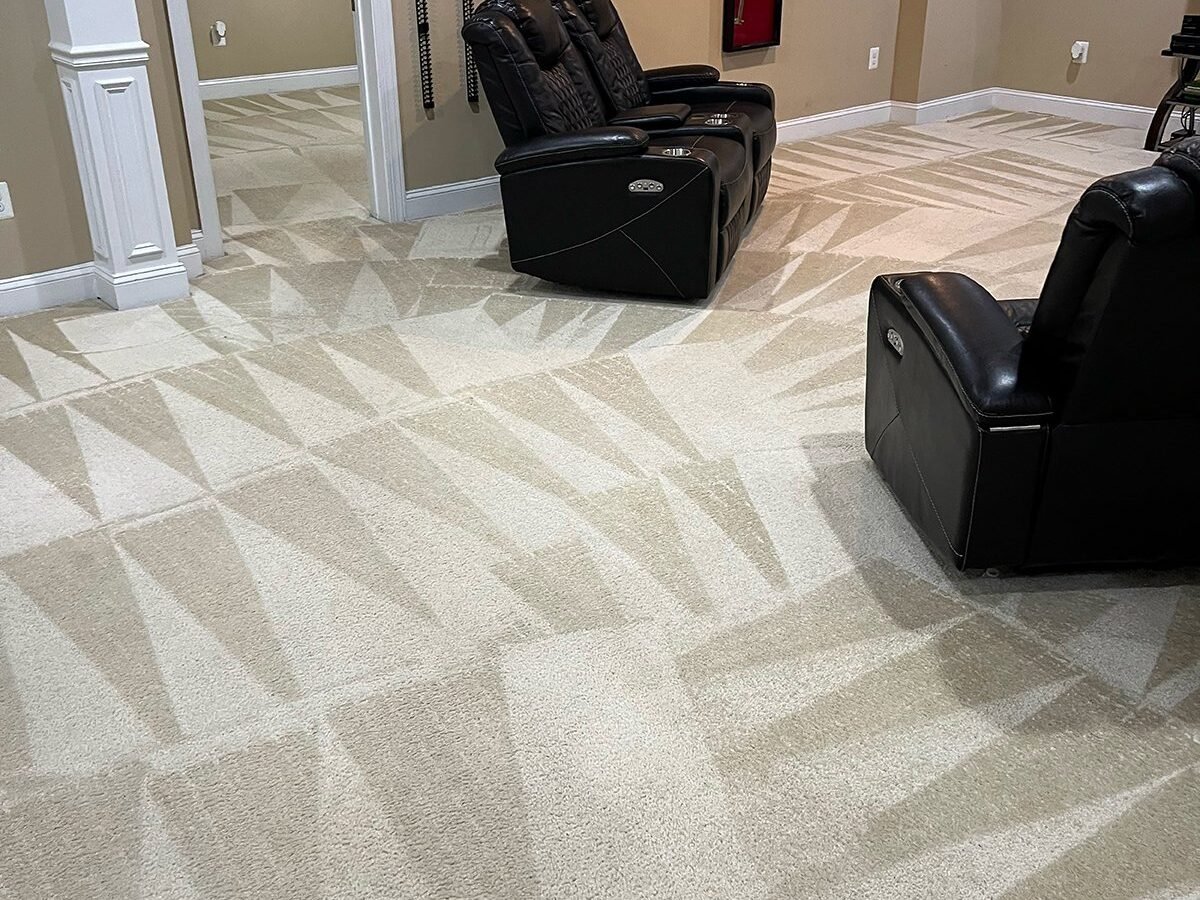
Turning the rug over tells you most of it
The first thing that happens on a collection in 22066 is that the rug gets folded back or flipped. From the reverse of a hand knotted piece you can count knots, see where the weave has been distorted by a furniture leg or a doorway, find old repairs that were invisible from the pile side, and read the color of the foundation, which goes brittle and tan wherever it has been repeatedly damp. Machine made rugs tell a different story from behind: a glued or latex layer that has begun to powder, which sets a hard limit on how much water that rug can take.
Houses here hold more rugs per address than anywhere else we work in Fairfax County, and the largest ones tend to be both the oldest and the least examined. A room sized rug does not get lifted for years at a stretch. Whatever happened underneath it is still underneath it.
Five things the inspection is looking for
- Dry rot in the foundation: warps that snap instead of flexing when the rug is folded gently against itself.
- Moth activity: bare foundation showing low in the pile in dark areas under furniture.
- Old pet damage: stiff, discolored foundation and dye migration visible from behind that never showed from above.
- Previous repairs: reweaves, overcasting and rebinding done with replacement yarn dyed at another time.
- Loose dyes: a concealed corner of every color wetted and blotted onto white cotton to see what moves.
Any one of those changes the wash. Dry rot means less handling and more support beneath the rug at every stage. A loose dye means cooler water and faster drying. Old urine means a different sequence entirely, closer to pet odor removal than to a routine wash, because the salts have to come out before the color question can even be asked.
Moving something that weighs as much as a person
An oversized wool rug is heavy dry and much heavier wet. Twelve by eighteen and fourteen by twenty pieces are common in these houses, and they need two people, a clear route and furniture moved aside first. We roll rather than fold whenever a rug allows it, because a fold puts a permanent crease into an aged foundation, and folds are exactly where dry rot cracks. If a piece is too fragile to hold its own weight rolled, it goes onto a support before it moves at all.
What we need from you is straightforward: the room emptied of whatever two people can carry, and a path to the door that does not require turning a fifteen foot roll around a banister. Antique rug cleaning is mostly a handling problem before it is a washing problem, and most of the damage rugs suffer happens on the way out of the house rather than in the water.
From the truck to the wash floor
Once inspected and tagged, the rug is dusted dry until it stops giving up soil. This step matters most on a big wool piece, because the volume of grit in a foundation scales with area: a large room sized rug can release several pounds of it. Water applied over undusted soil simply makes mud in the weave, and mud does not flush out cleanly no matter how long you work at it.
Fiber decides the rest. Wool tolerates a firm hand and rewards it, silk does not, and a cotton foundation under either one swells when wet and shrinks as it releases that water. A house with hand knotted wool in the dining room, a silk piece in a study and a flatweave in a hallway is three separate jobs sharing one delivery date, and they do not come off the wash floor on the same schedule.
Then the wash
Hand washing follows the lie of the pile, with cool water and a shampoo that is safe on wool. We keep flushing until the runoff shows no color and no cloudiness and the acidity has been brought back where wool belongs, then extract and dry the rug horizontally with fans running across it. Flat drying is not an aesthetic preference. A large rug hung or dried unevenly shrinks more along one axis than the other and comes back out of square, which you will discover the day you try to set it back between two pieces of furniture.
Scheduling around a house full of rugs
Most collections here are three, four or six pieces at once, returned together after four to seven days. Doing them as one batch means the runners and the room sized rugs from the same floor are finished to a single standard rather than months apart. Wool rug cleaning in Great Falls, VA is nearly always that kind of job rather than a single rug on its own, and the pickup is planned around the largest piece in the house.
Owners with a dozen rugs generally end up on a rotation instead of washing everything at once: the pieces under dining tables and inside main doorways go every year or two, the ones in guest rooms and quiet studies go far less often. We keep a note of what we washed and when, so the next call starts from a record rather than from memory. Anything showing moth activity moves to the front of that list regardless of how clean it looks.
With the floors open it becomes the obvious week for carpet cleaning in Great Falls on bedrooms and stairs, and for upholstery cleaning in Great Falls on whatever furniture had been standing on the rug. Wool broadloom gets hot water extraction held at the same mild pH the rugs get, and long lined panels in those rooms come down for curtain cleaning. Pickups share routes with McLean and Sterling, so rug cleaning in Great Falls rarely waits long for a slot.
Recent rug cleaning work
Real jobs in Northern Virginia homes, photographed on the day.
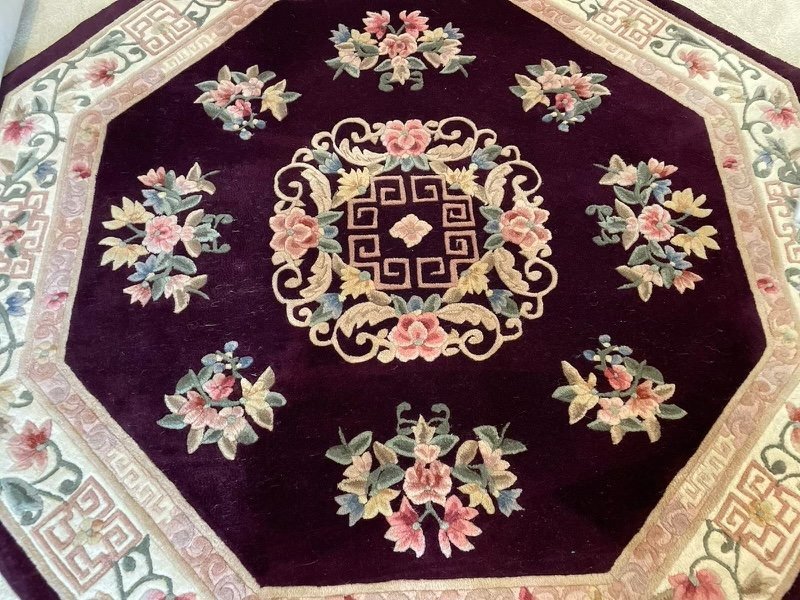
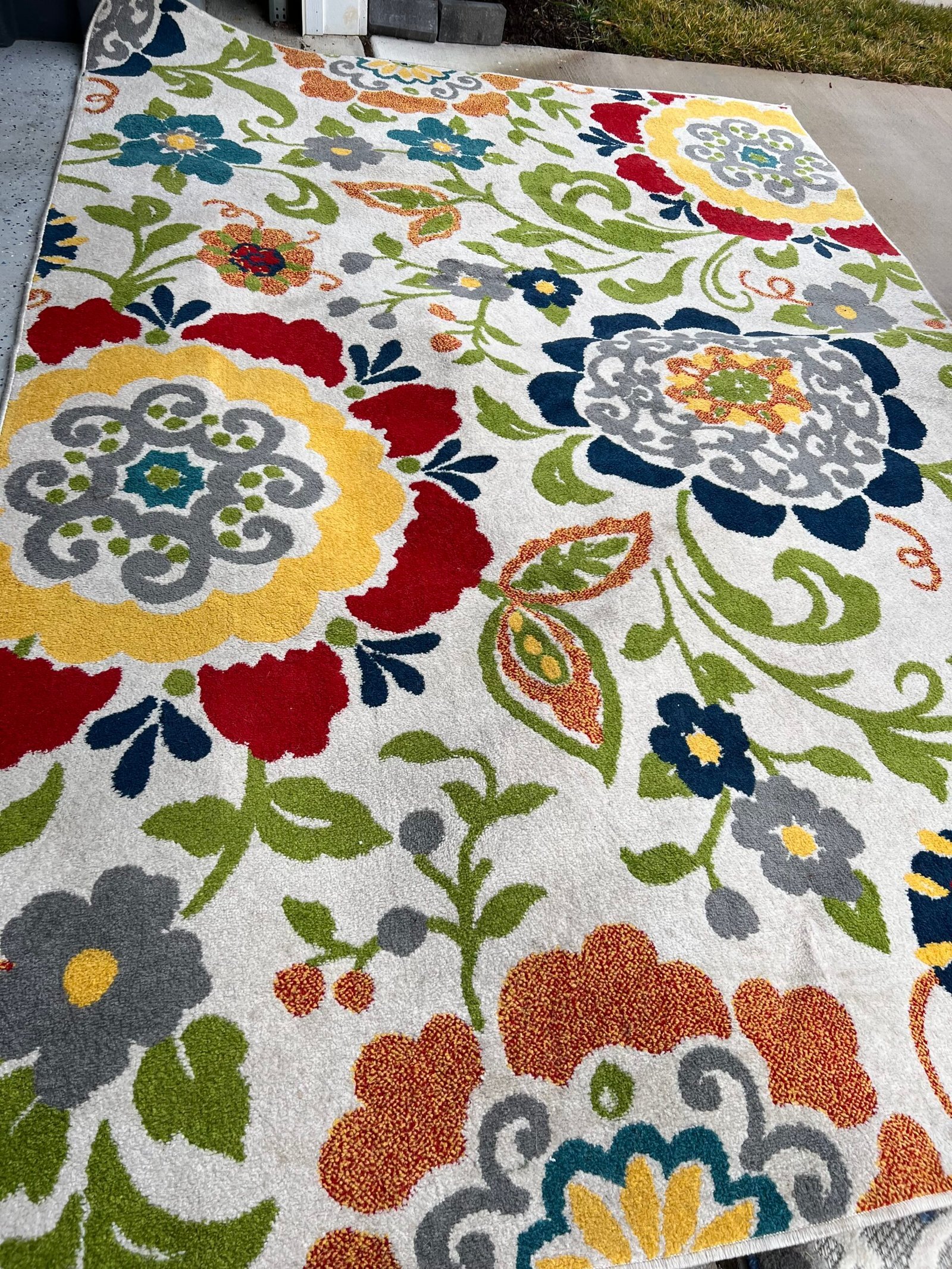
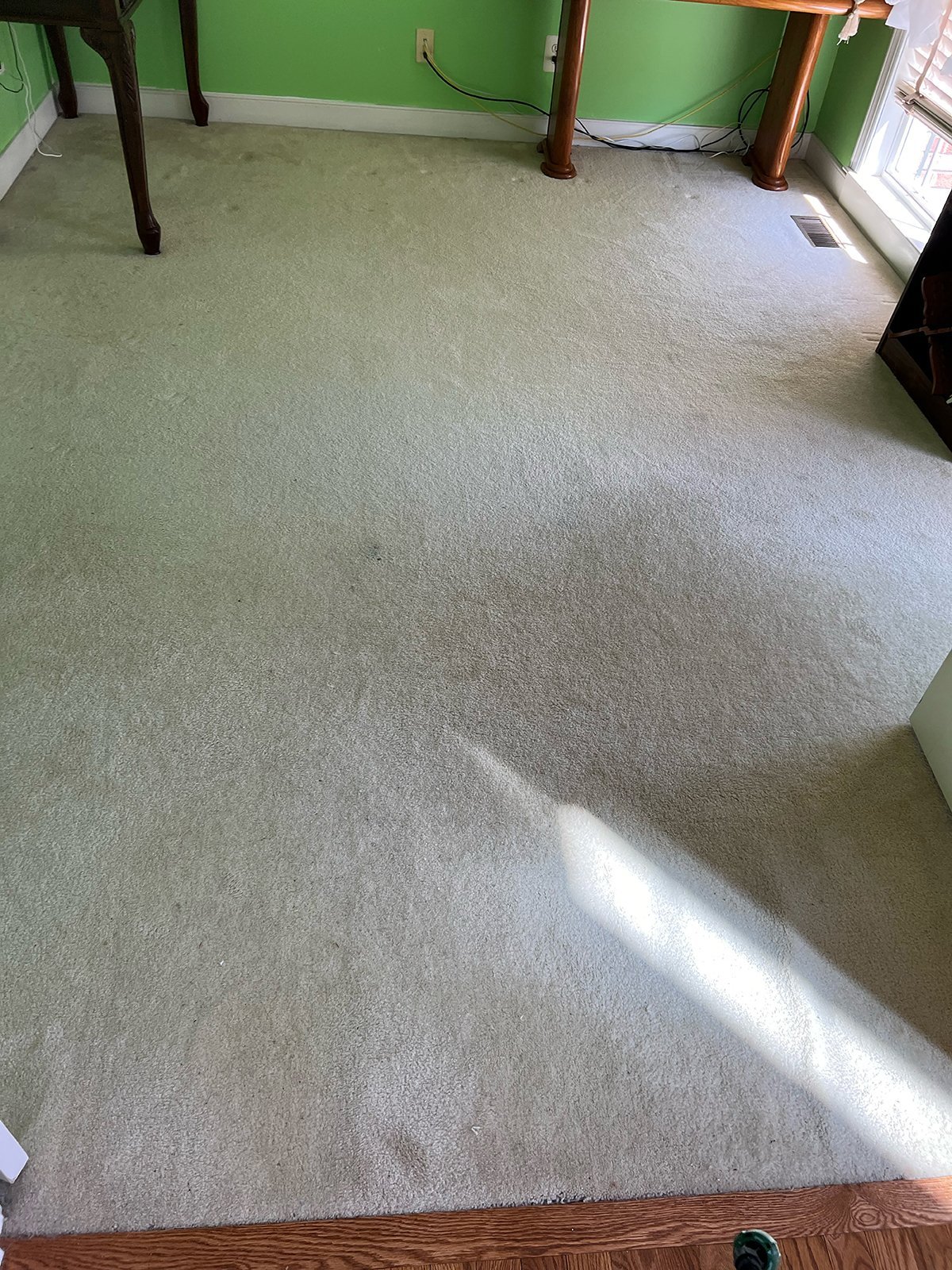
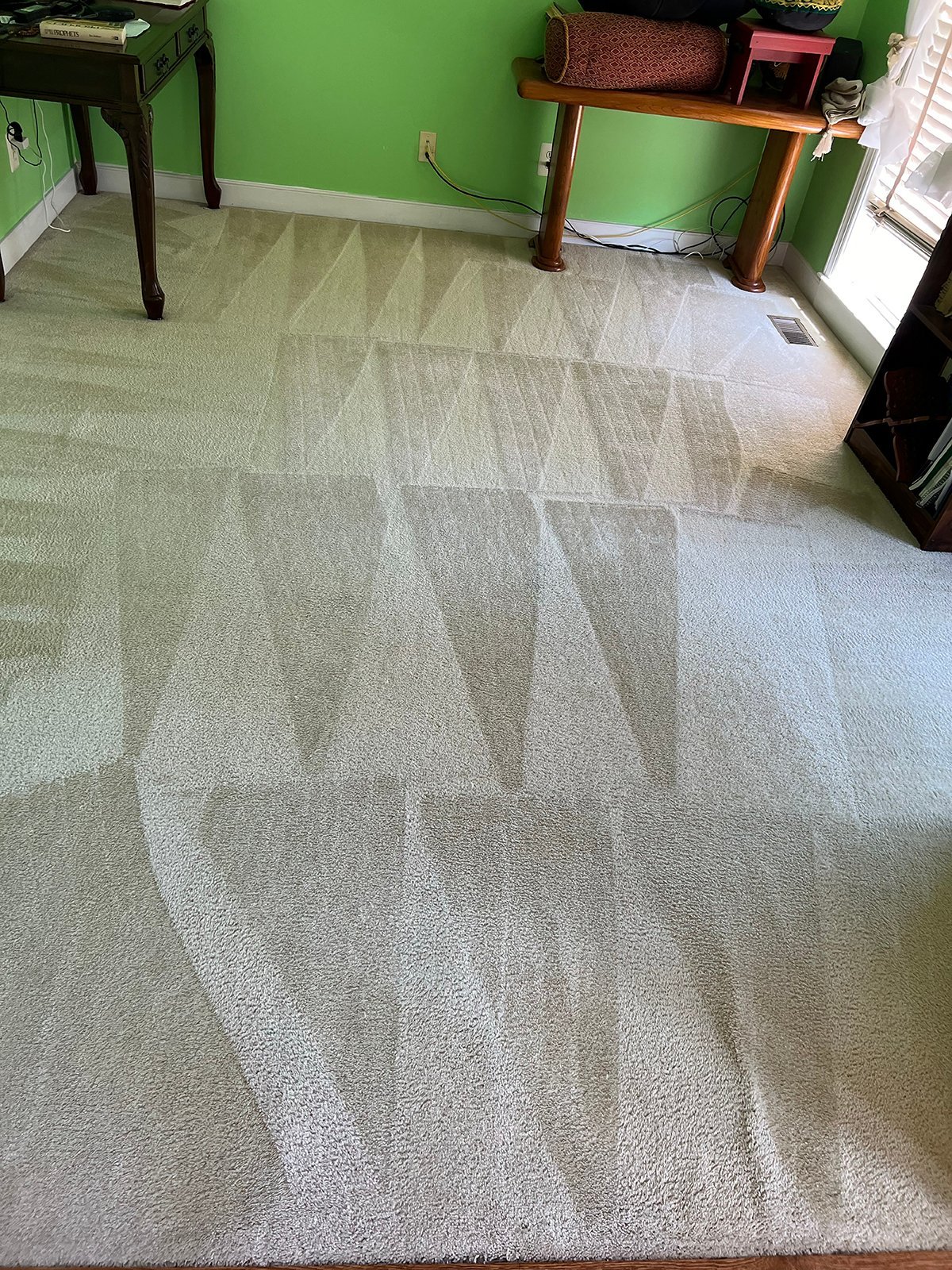
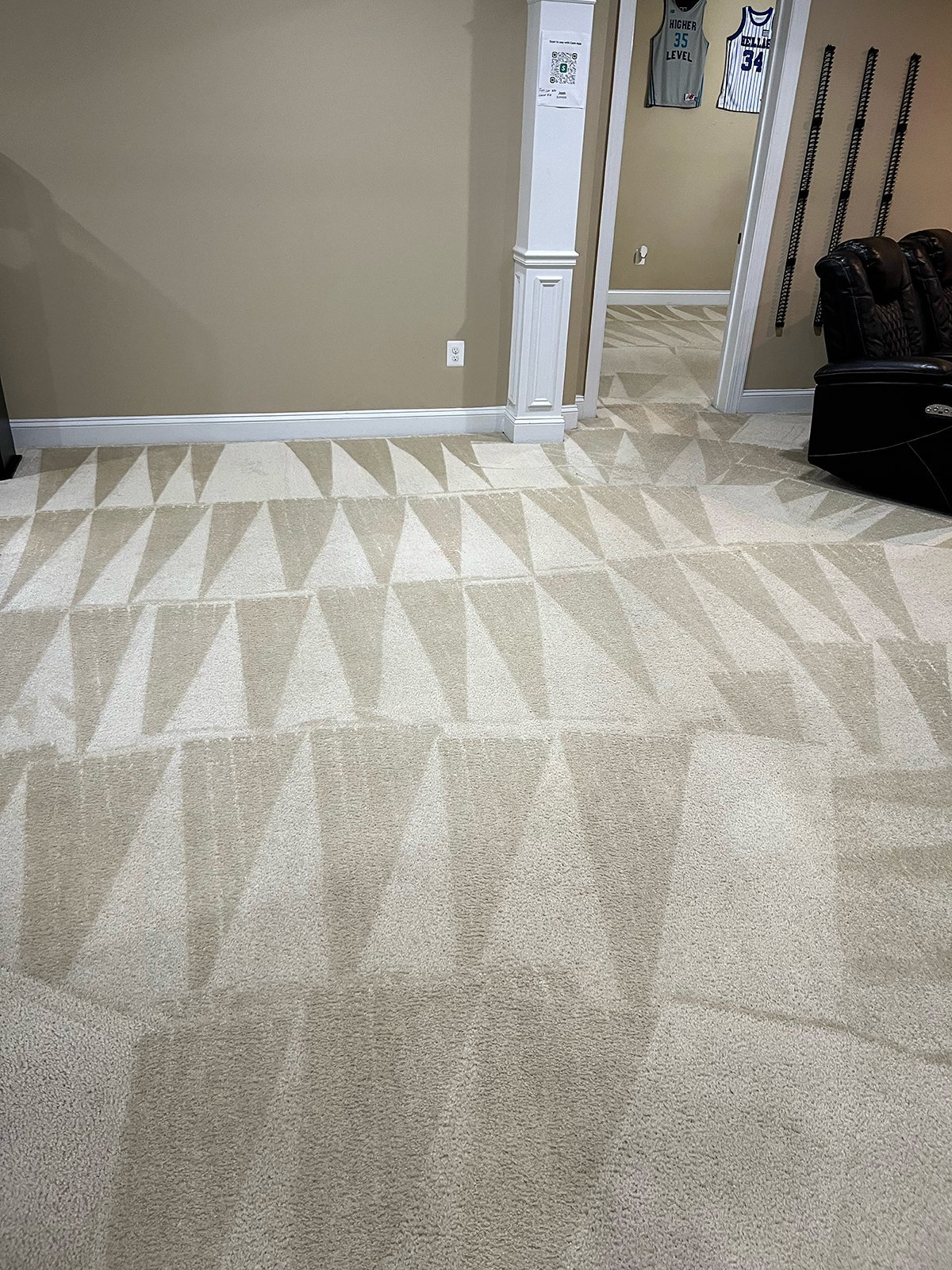
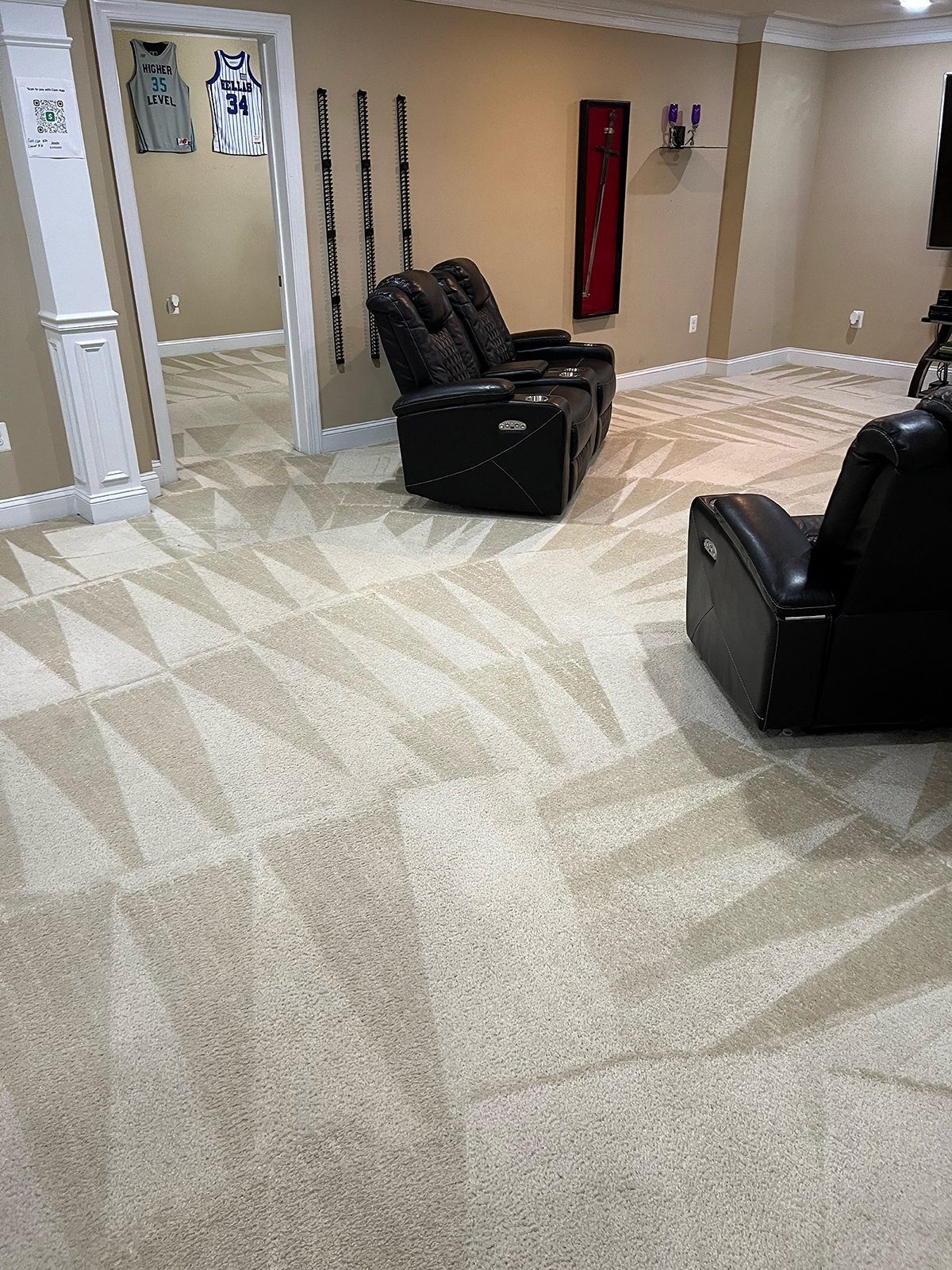
What this looks like
A real job, before and after. Drag the handle.
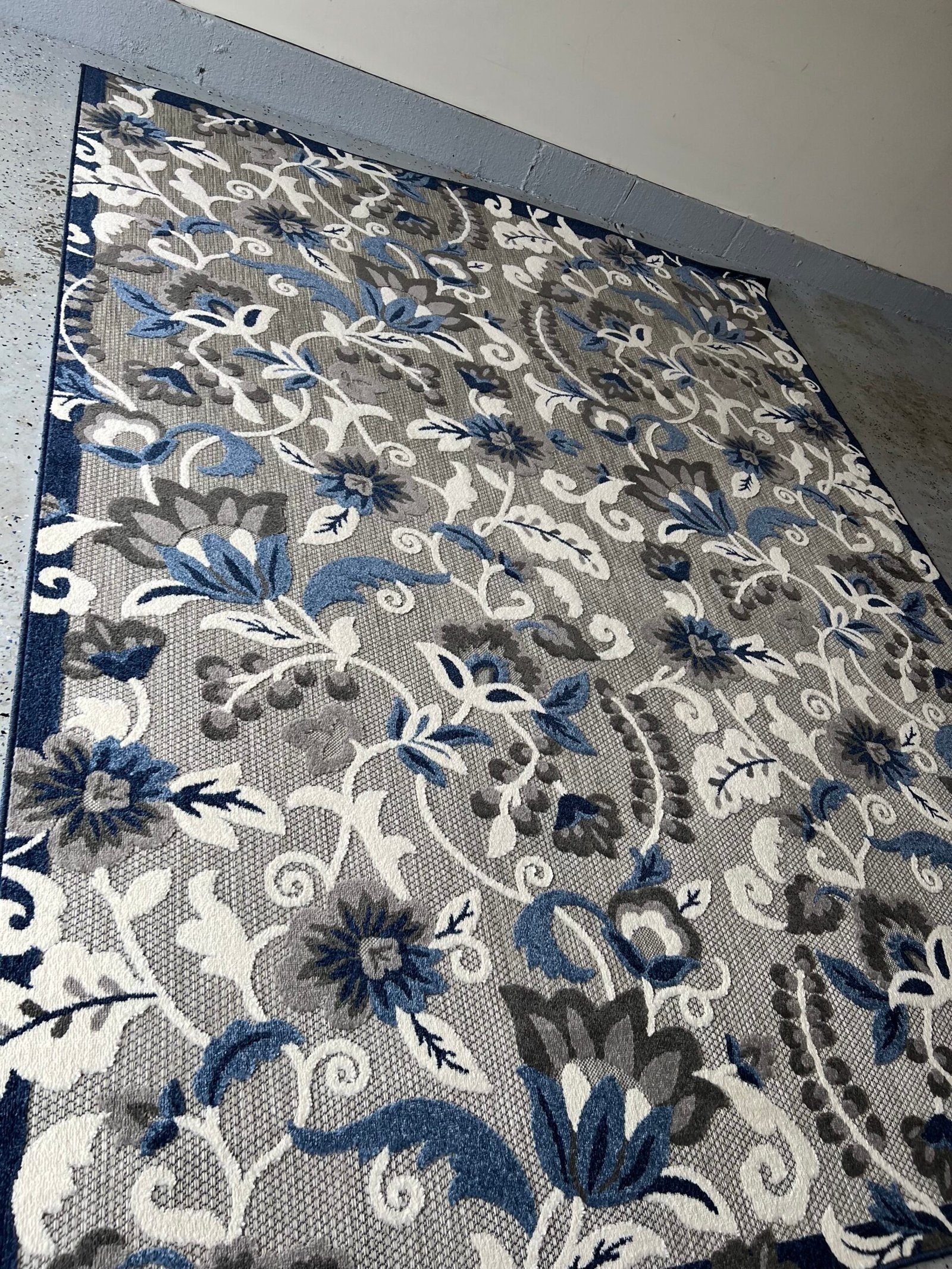
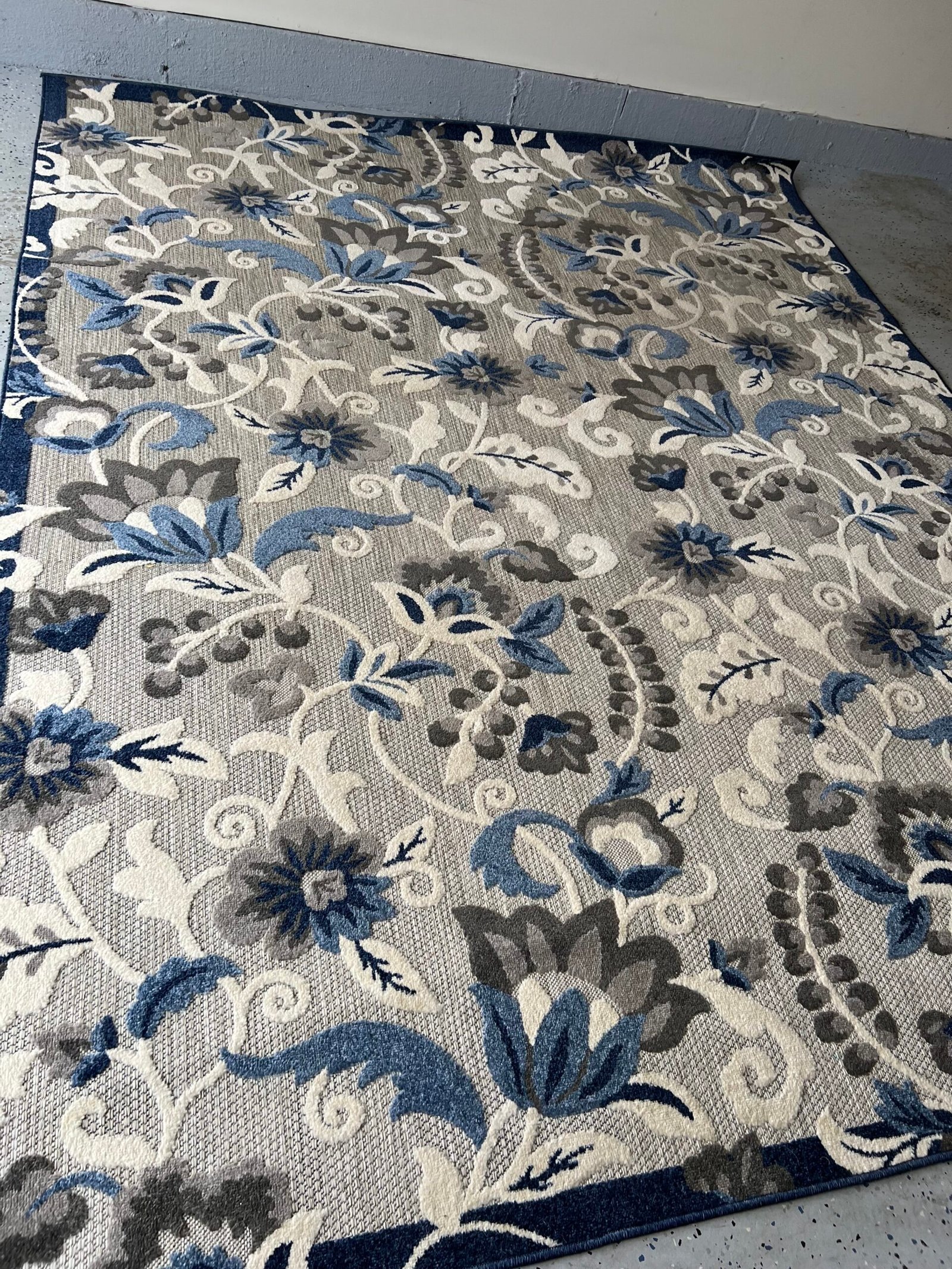
Drag the handle. The left half is where we came in.
Questions we get about this
How long does the inspection take at the house?
Fifteen to twenty minutes for a couple of rugs, longer if there are six. The rug gets turned over or folded back, the reverse is read for repairs and weave distortion, dark areas under furniture are checked for moth activity, and a concealed corner of each color is dye tested. You are told what we found before anything is loaded, and it carries no obligation.
Can you get a fourteen by twenty rug out of our great room?
Yes, with two people and a cleared route. The rug is rolled on its long axis, which gives a roll about fourteen feet long, and that has to leave the room and the house without being turned inside a stairwell or around a tight banister. We look at the route during the inspection and tell you then if anything must come off a wall or out of a hallway.
What does dry rot actually look like?
From behind, the foundation goes tan or brown and loses flexibility. Fold the rug gently against itself along that area and you hear or feel a small crack rather than a smooth bend. It comes from repeated damp: a planter, a slow leak, a damp basement wall, years of it. Rotted cotton warps do not recover, so the wash gets adjusted around them.
We have six rugs. Do they all have to go at once?
No, though it is usually better. One pickup, one delivery, and pieces sharing a room come back finished to the same standard on the same day. If you would rather not have a whole floor bare at once, we split the work into two batches taken on separate runs. Every rug is tagged and tracked individually either way.
Is there anything you find during inspection that means you will not wash a rug?
Occasionally. Severe dry rot across a wide area, a foundation already splitting, or dyes so unstable that washing would move color into an adjacent field. In those cases we explain what we are seeing, show you the area on the rug, and suggest leaving it or having it stabilized by a restoration weaver first. We would rather decline than hand back a damaged piece.
Why do you roll rather than fold our older rugs?
A fold concentrates every bit of stress along one line of foundation. On a newer rug that is harmless; on a seventy year old cotton foundation it is precisely where the warps crack. Rolling spreads the bend across the entire rug. If a large piece must be folded to clear a door, we fold once, briefly, and unroll it immediately rather than letting it sit.
What is under a room sized rug that has not been lifted in years?
Dust that has migrated down through the pile and settled on the floor, sometimes a shadow of the pad, and in older houses a fine grit that has been abrading both the rug and the floor finish. Occasionally moth casings along the edges where a vacuum never goes. It is worth seeing, because it tells you how often that rug needs dusting.
Do you handle the antique pieces differently from the newer ones?
Yes, in water temperature, handling and drying. Older pieces get less agitation, less time wet, more support underneath when moved, and air on them sooner after extraction. The dye test governs much of it. A newer, stable, well made wool rug tolerates a longer wash and a firmer hand than a hundred year old piece with oxidized browns in the design.
Have a look at it in person
Walkthroughs are free and take about fifteen minutes. We agree the scope together and point out anything that will not come out before a hose comes off the truck. Over a decade in Northern Virginia and that has not changed.