
Upholstery Cleaning in Great Falls, VA
A typical Great Falls appointment is not one sofa. It is a fourteen foot sectional in the family room, two chairs and a settee in a formal room, bar stools, a study chair and eight dining seats, and the order we clean them in decides whether the house is usable that evening.
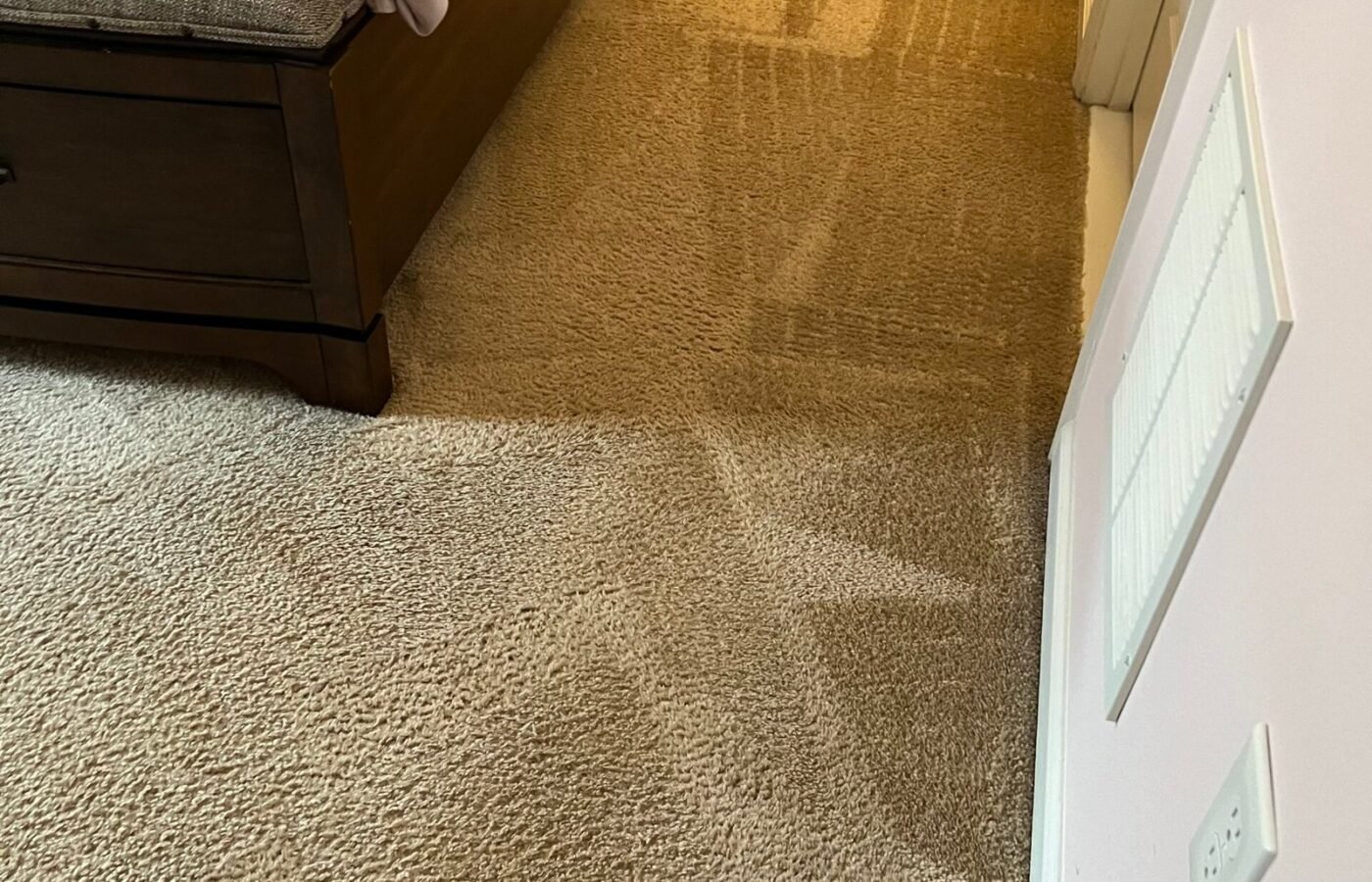
Fourteen feet of sectional, and everything else on the list
The single largest piece we handle regularly is a family room sectional in a Great Falls house: often four to six seats plus a chaise, sometimes an L or a U that runs fourteen or sixteen feet along two walls. Upholstery cleaning in Great Falls tends to start there because that one item can absorb ninety minutes on its own, and because the rest of the schedule for the day depends on how it behaves once we open it up. A sectional that separates into three units takes hot water extraction better and dries faster than one built as a single frame, and we learn which we have in the first few minutes.
Then there is the rest of the house. Homes in Great Falls, VA (22066) commonly have a formal living room that goes unused, a family room that takes everything, a study, a lower level with a second seating group, and a dining room with eight or ten upholstered seats. Counted honestly, that is fifteen to twenty pieces. This is why we book these as half day jobs rather than squeezing them between two other addresses, and why the walk through at the start is not a formality.
How we sequence a house with fifteen pieces in it
Upholstery cleaning in Great Falls is run as a sequence rather than a list, and the order is driven entirely by drying.
- Walk every room, read every tag, note anything unlabeled or delicate
- Dry soil removal throughout, upholstery tool and crevice tool, before any liquid
- Clean the rooms you need back first, so they have the longest head start
- Leave the family room sectional until we can give it uninterrupted time
- Place air movers as we finish each group rather than all at the end
The practical result is that the dining chairs and the formal room are usually touch dry before we have finished the sectional, and the house is not simultaneously wet in every room at six in the evening.
The walk through is also where we find the pieces nobody mentioned on the phone: a window seat cushion, two bar stools at the island, a bench at the foot of a bed, the chair in a guest room that the cat has claimed. In a house of this size that list adds an hour, and it is far better to know about it at nine in the morning than at two in the afternoon.
Reading codes across a house that was furnished over twenty years
In a large Fairfax County home the furniture was not bought at once. The sectional may be four years old with a crisp W or WS tag under a cushion. The settee in the front room may be an inherited piece with nothing on it at all. The dining seats may be a mix, some original and some reupholstered in a fabric whose code nobody recorded.
Three letters and one that stops the job
A W tells us a water based method is safe, so heated solution and a hand tool are both available. Anything carrying an S is restricted to solvent work. WS accepts either approach and we choose based on the soil in front of us. X means vacuum only, and on an X piece there is no clever workaround: liquid causes shrinkage or a permanent mark, so it gets thorough dry soil removal and nothing else. On every unlabeled piece we test a hidden area, watch for dye moving onto a white towel and for a ring at the wet edge, and decide from what we see rather than from what the fabric looks like.
Body oil, arms and headrests in a family room that gets used
General soil is mineral: grit, lint, dust, whatever came in on clothing. Body oil is not, and it does not respond to the same treatment. It concentrates in three places, the top of the back where heads rest, the inside arms, and the front edge of the seat cushions, and it darkens over time as it oxidizes. On a large family sectional those areas need a pre treatment with a longer dwell time, worked in with a soft brush and then extracted, while the panels beside them need one straightforward pass. Cleaning the whole piece identically leaves the oily zones visibly darker than everything around them, which is worse than not cleaning it at all.
Wood, skirts and the floors these pieces stand on
Formal Great Falls furniture stands on turned legs, carved feet and long skirts, frequently over refinished hardwood or a wool rug. Water at the base of a leg raises grain and leaves a mark, and a wet skirt hem transfers a dark line onto the floor beneath. We block the feet up off the floor, lay protection underneath, and clean the last inch of a skirt with a much drier method than the body of the piece. Zippered cushion covers stay on the foam, always. They look removable and they are cut to the exact size of the foam, so a wash cycle shrinks them past the point of return.
Upholstery cleaning in Great Falls ends with drying, and the numbers are worth writing down. Face fabric reaches touch dry in about three to five hours. Foam runs twelve to twenty four hours depending on the weather, and every cushion stays on edge until then.
Houses this size rarely need one service. Wall to wall in bedrooms and the lower level goes with carpet cleaning, and adding carpet cleaning in Great Falls to the same visit avoids a second setup on a long driveway. Wool and silk rugs under the formal pieces should not be cleaned in place, so they go out for rug cleaning. Full length panels in a two story room are handled through curtain cleaning in Great Falls, and curtain cleaning is done while the furniture dries so nothing waits. If a dog lives on the sectional, raise pet odor removal before we begin. We cover McLean and Herndon on nearby routes.
Recent upholstery cleaning work
Real jobs in Northern Virginia homes, photographed on the day.
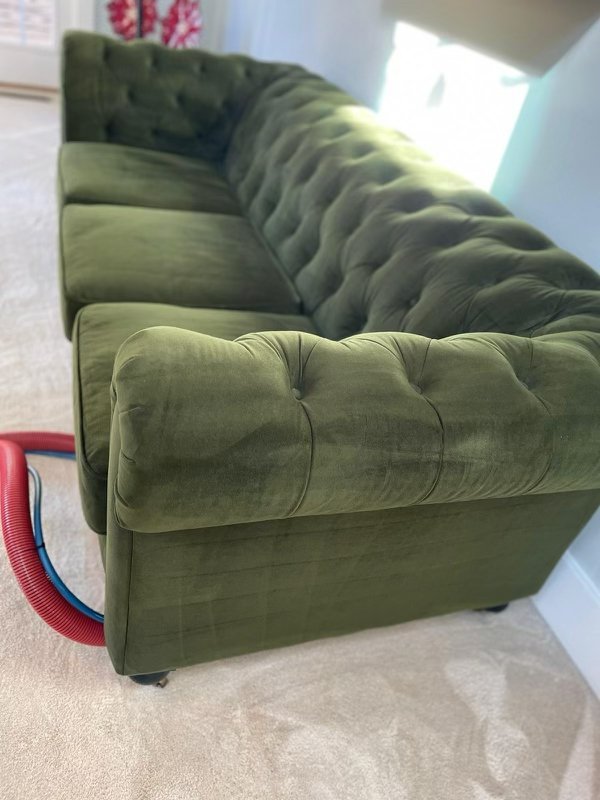
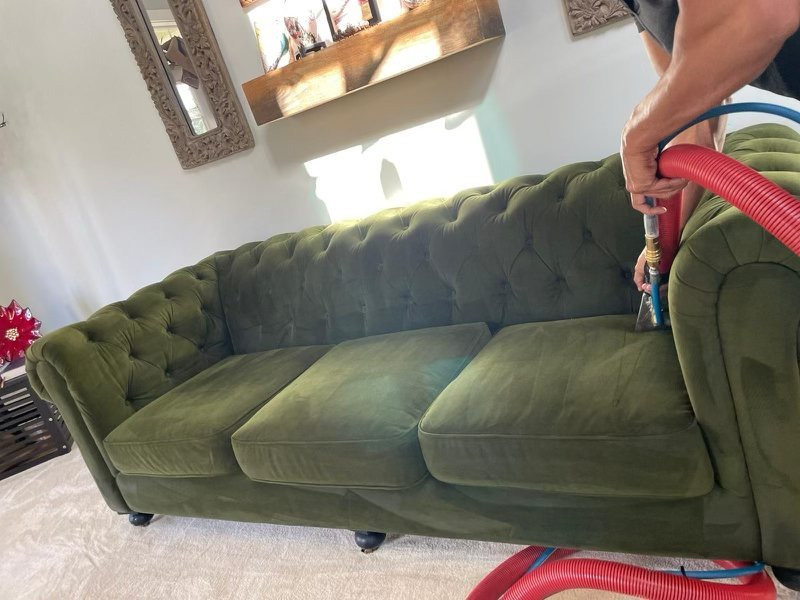
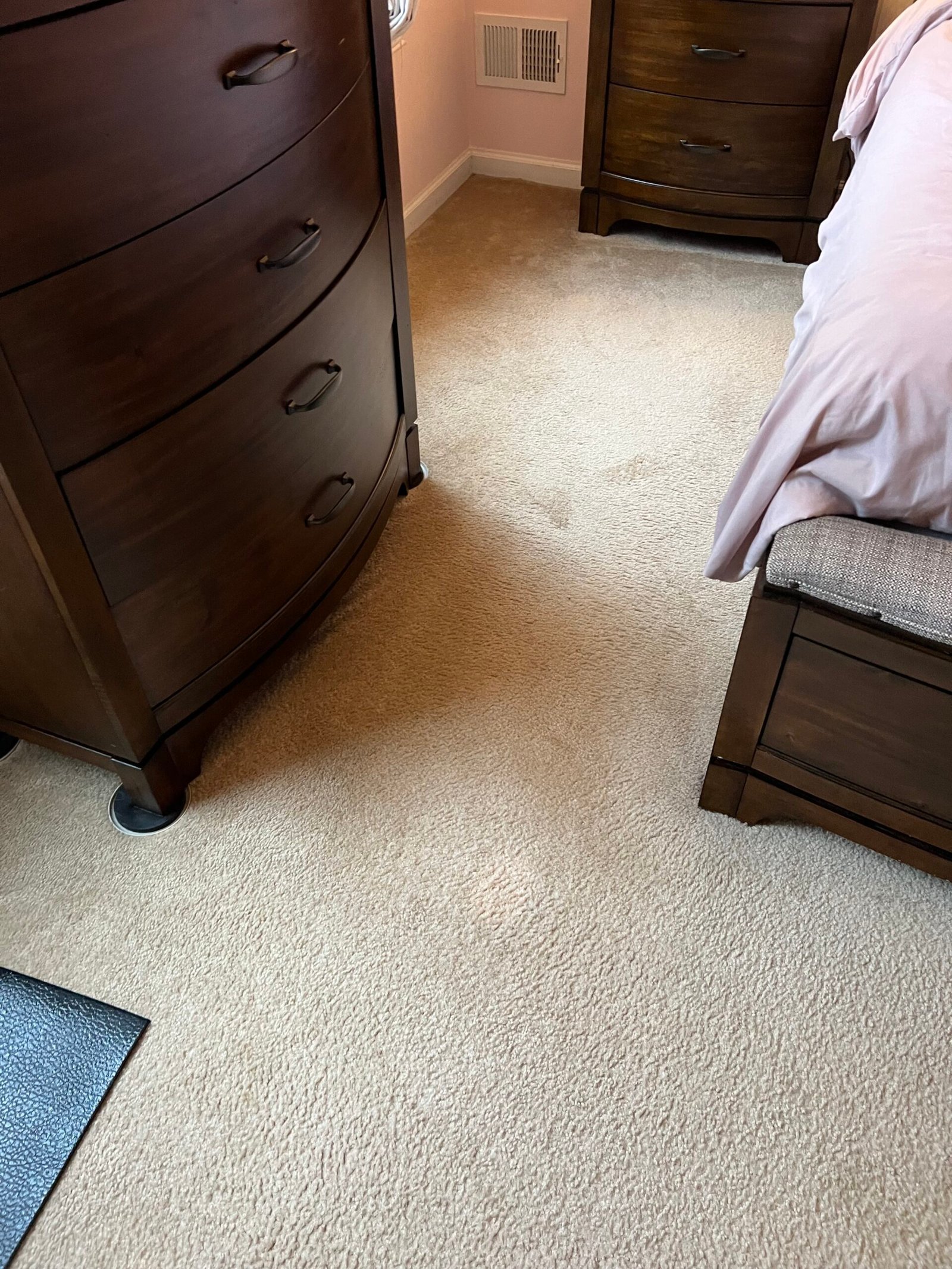
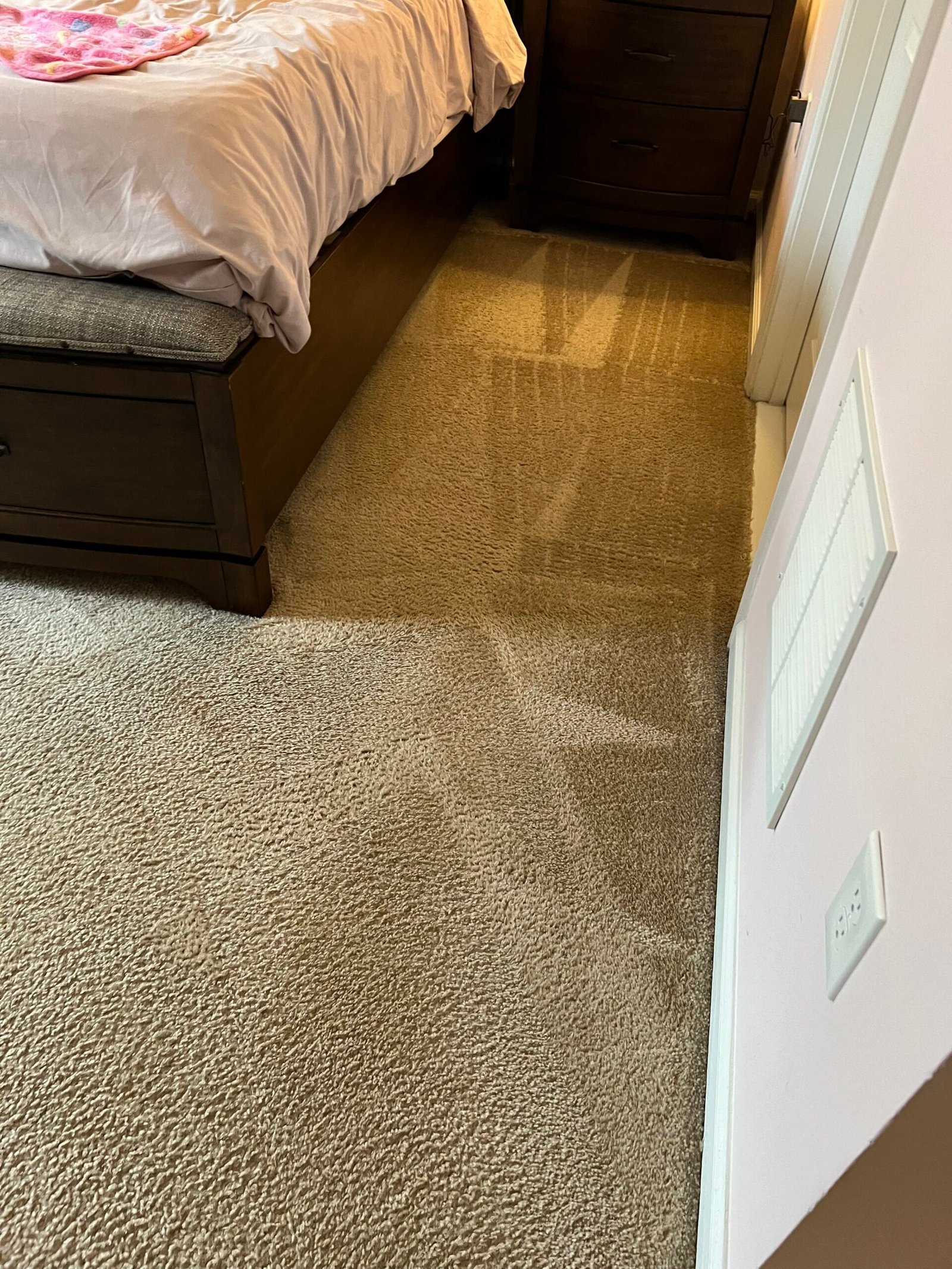
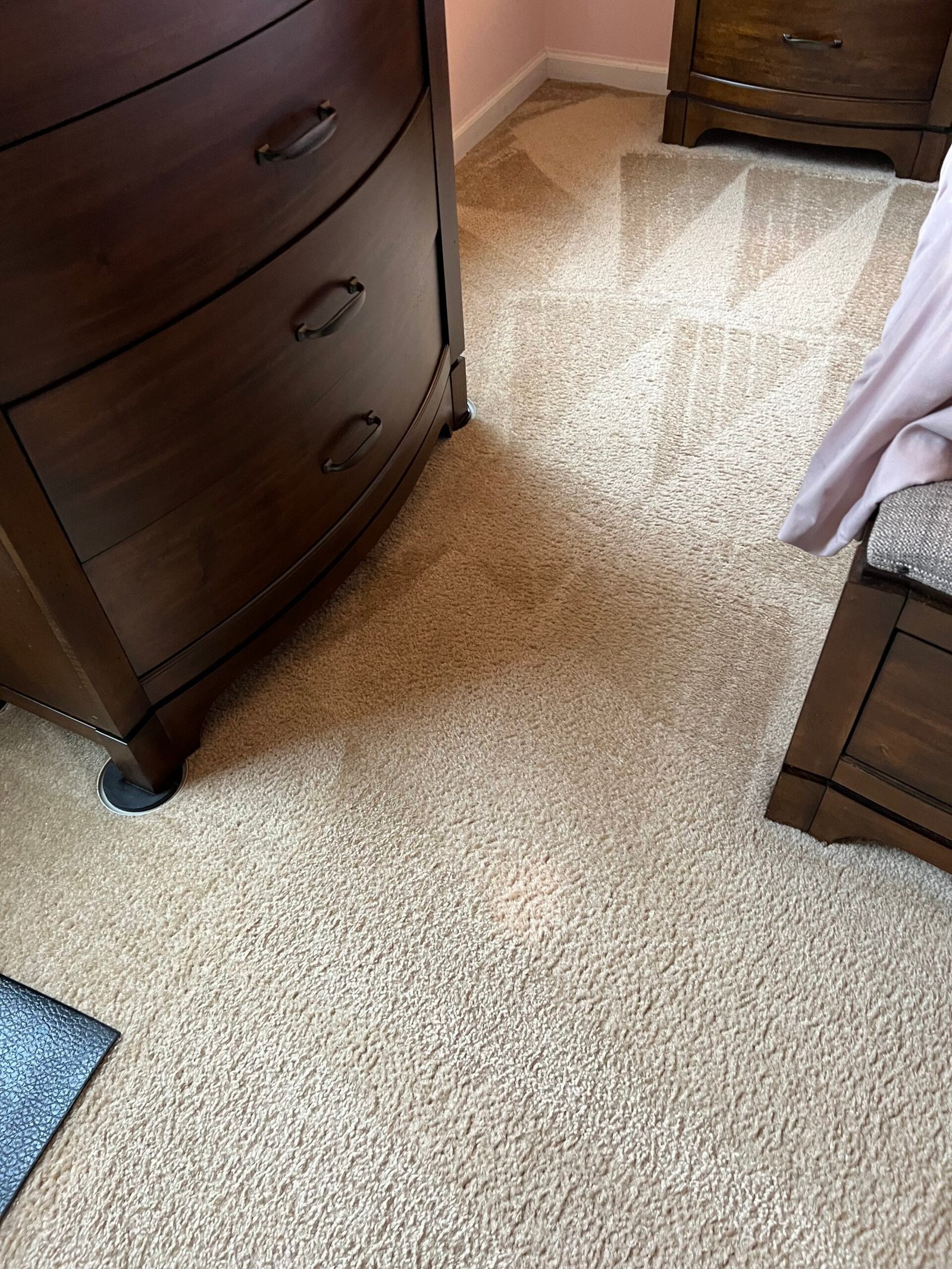
What this looks like
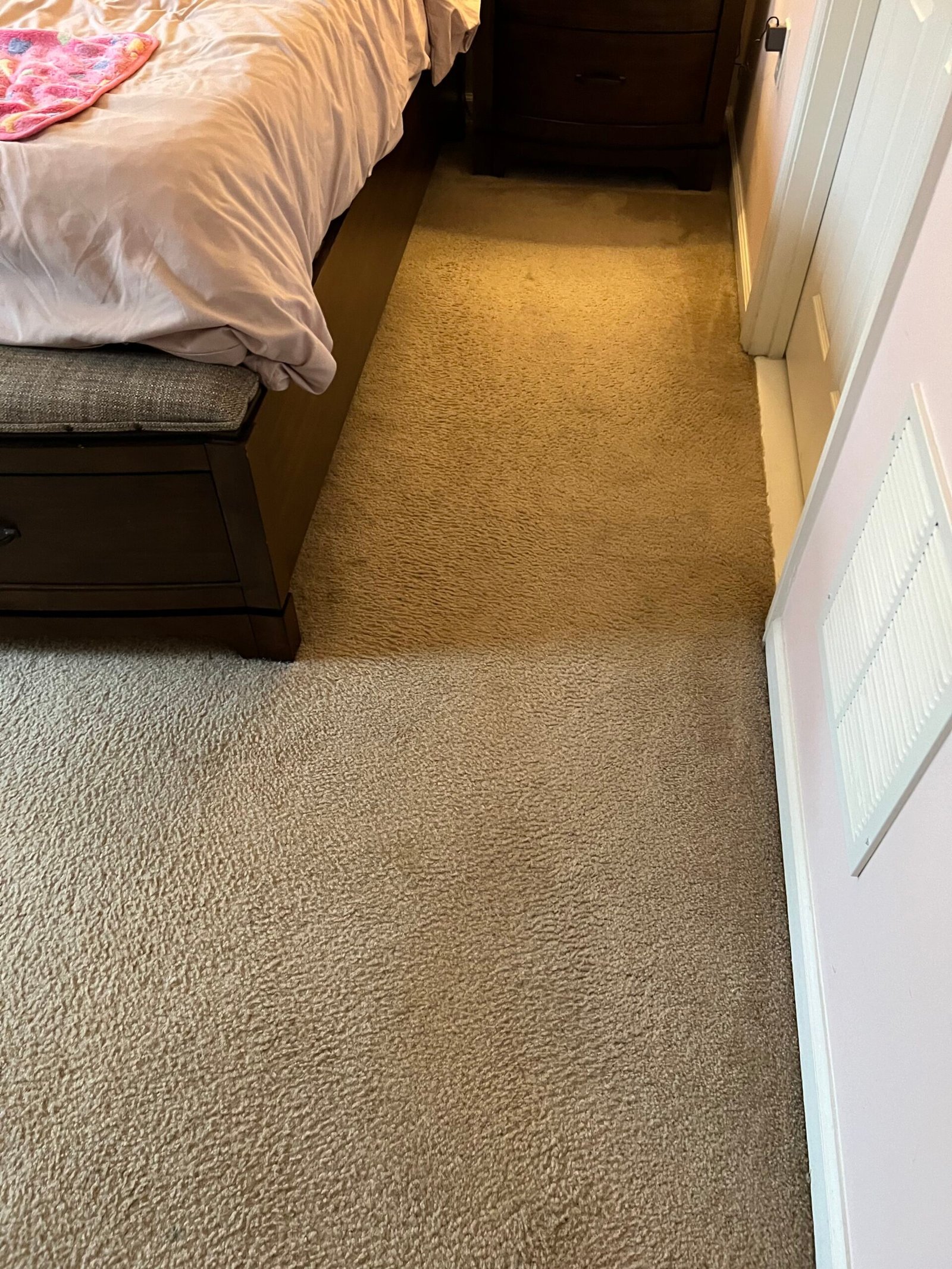
A real job, before and after. Drag the handle.
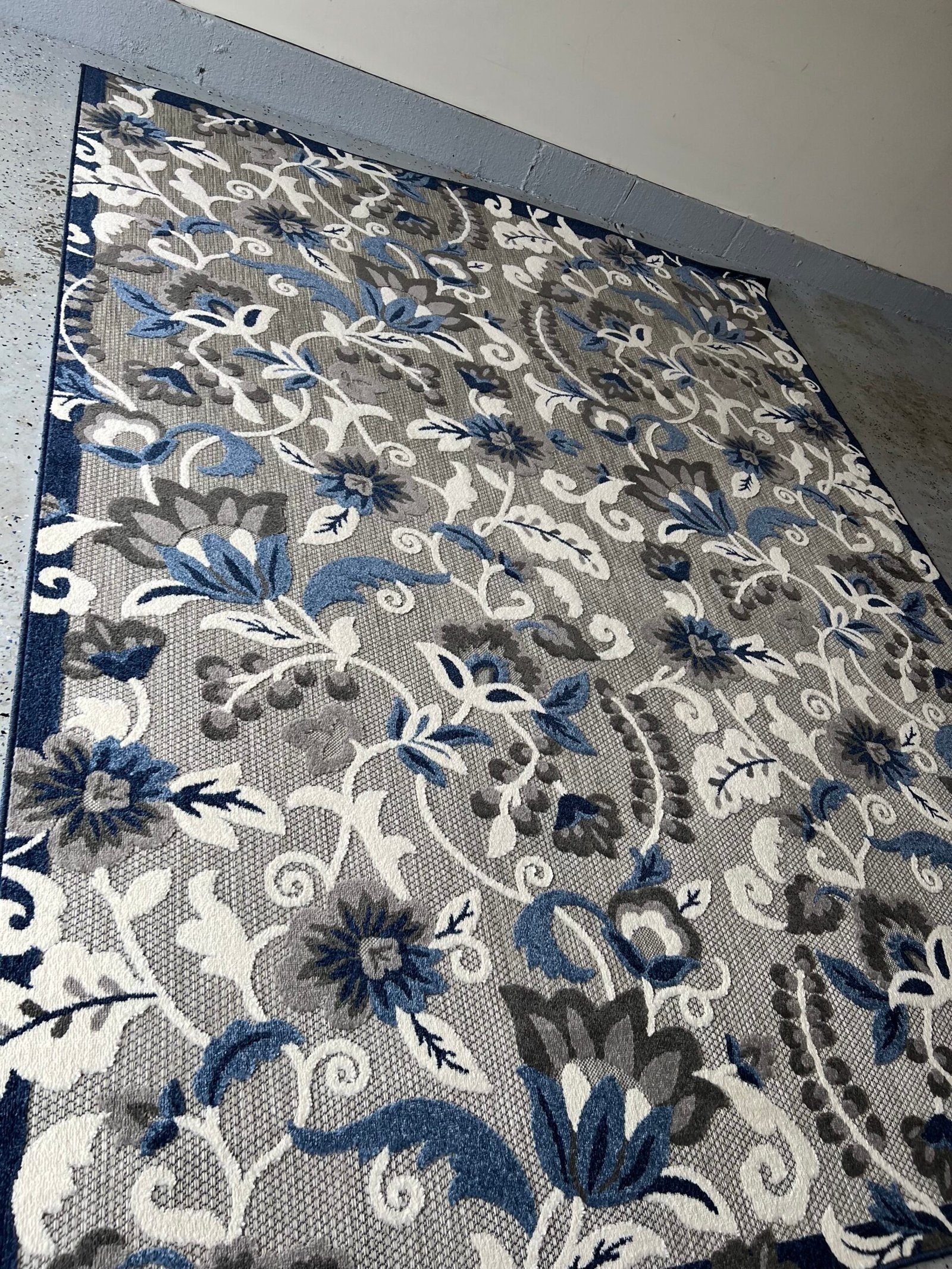
Drag the handle. The left half is where we came in.
Questions we get about this
We have furniture in four different rooms. Do you do it all in one visit?
Usually yes, as a half day booking. Fifteen to twenty pieces is normal for a house this size and we would rather do them together than return three times, because one setup covers the whole house. Give us the room by room count when you call so the day is scheduled correctly. Arriving expecting one sectional and finding nineteen pieces helps nobody.
Our sectional is one continuous frame. Does that change anything?
It changes the time and the drying. A sectional that separates can be cleaned from more angles and gets better airflow between the units afterward. A single fourteen foot frame has to be worked from the front and the ends only, and the middle seats dry more slowly because air reaches them from one side. We compensate with air mover placement and by standing every cushion on edge.
Which rooms should we ask you to clean first?
Tell us which room the household actually needs that evening and we clean it first so it has the longest drying head start. In most Great Falls houses that is the family room or the dining room. The formal living room can be left wet overnight without inconveniencing anyone, so it goes later in the day even though it is often the first room a visitor sees.
The eight dining chairs look fine. Are they worth cleaning?
Dining seats are among the most soiled upholstery in a house and it rarely shows, because the fabric is usually a mid tone pattern chosen for exactly that reason. They take food, drink and the oil from hands and clothing every time somebody sits down. A white towel test on a seat deck settles it quickly. They also clean fast, so adding them to a larger job costs very little time.
Can you clean a piece that has already been reupholstered?
Yes, but it goes in the unlabeled category, because the original manufacturer tag no longer describes what is on the frame. We test a hidden area first and look for dye transfer and water marking. If you still have the fabric details from the upholsterer, bring them out. Knowing whether the face cloth is a natural fiber or a synthetic saves us a good deal of guesswork.
The top of the sectional back is darker than the rest. What is that?
That is body oil from heads and hair, and it is chemically different from ordinary soil. It builds where contact is repeated and it darkens as it oxidizes, which is why the band sits along the top of the back and nowhere else. It needs a pre treatment with a longer dwell time worked in before extraction, rather than the same single pass used on the surrounding panels.
Do you bring your own water and power?
Water and waste stay with the vehicle. We need a standard household outlet for air movers, and access from the driveway to the door for hose. On the longer driveways here that means a longer hose run, which is normal and does not affect the work. If parking near the house is restricted for any reason, mention it when booking so we plan the run in advance.
How long before the house feels normal again?
Face fabric is dry to the touch in roughly three to five hours. The foam inside cushions takes twelve to twenty four hours, longer in humid weather. Cushions stay standing on edge until then. Practically, a house cleaned starting in the morning is comfortable that evening, with the last few pieces still off limits for sitting until the following day.
Have a look at it in person
Walkthroughs are free and take about fifteen minutes. We agree the scope together and point out anything that will not come out before a hose comes off the truck. Over a decade in Northern Virginia and that has not changed.