
Upholstery Cleaning in Haymarket, VA
Run a hand along the top of your sectional back and compare that strip to the panel six inches below it. The band is darker, slightly tacky in places, and it is not the same substance as the soil on the seat.
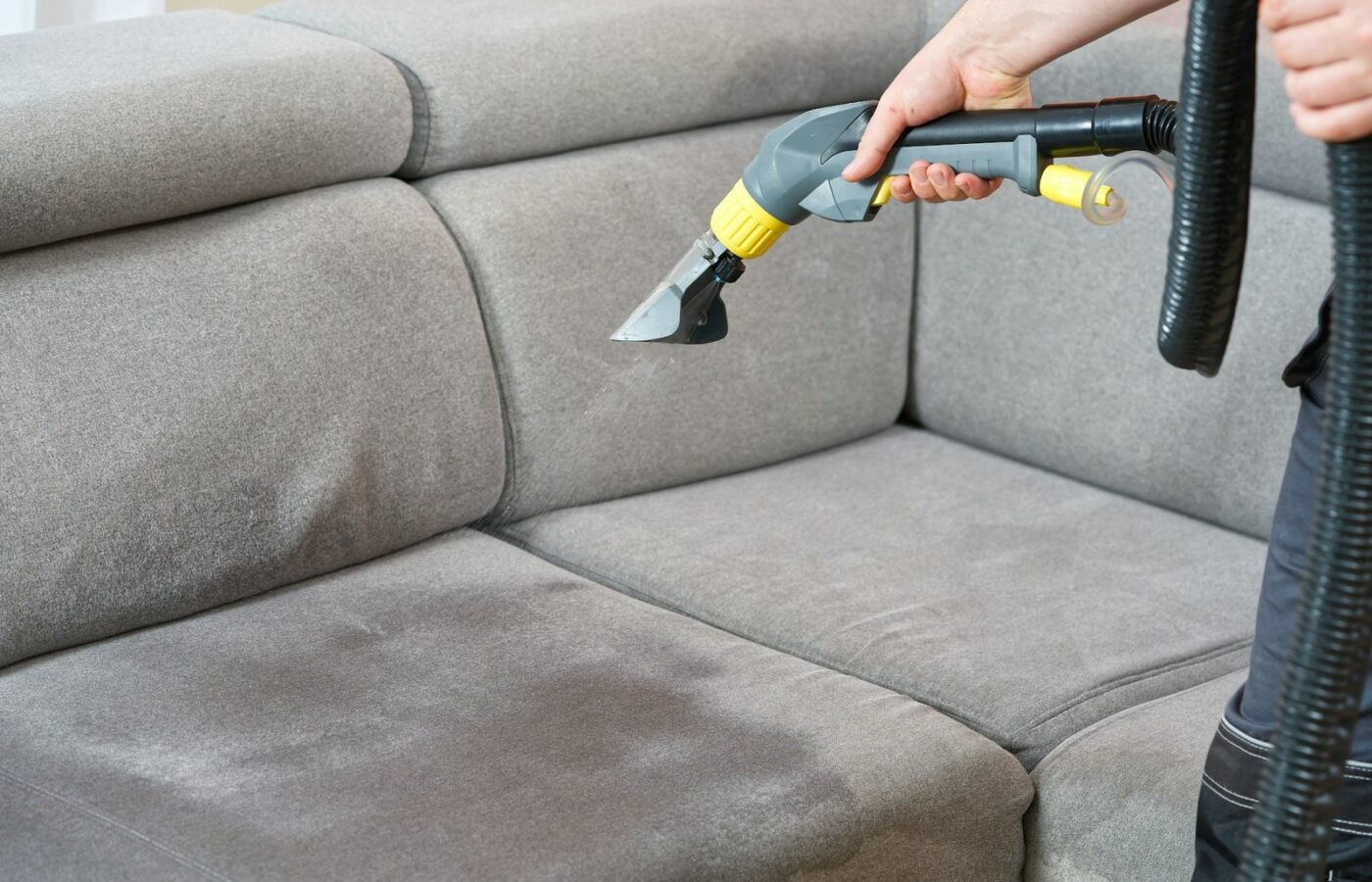
The dark band along the top of the back
Almost every large family room piece we see for upholstery cleaning in Haymarket has it: a band across the top of the back cushions where heads rest, another on the inside arms, and a third along the front edge of the seat cushions. It is body oil, along with hair product and lotion, and it accumulates only where skin touches fabric repeatedly. Left alone it oxidizes, which is why the band darkens year over year and why a five year old sofa can look worse across a six inch strip than across the entire rest of the piece.
Owners usually assume this is dirt they failed to vacuum. It is not, and vacuuming will never touch it. Oil is not particulate. It has bonded to the fiber and it needs to be broken down chemically before anything can carry it away.
Arms, headrests and the front edge of a cushion
Those three zones get a pre treatment formulated for oil rather than the general cleaning solution used on the rest of the piece. It is applied, allowed several minutes of dwell time so it can reach the base of the fibers, agitated with a soft brush so it is worked through the pile rather than sitting on top, and only then extracted. If the recovered water is still dark, the zone gets a second round. The panels between those zones need one pass and nothing more, which is the whole point: cleaning a sectional uniformly leaves the oily bands visibly darker than everything around them.
Sectional cleaning when the piece runs twelve feet
Most upholstery cleaning in Haymarket is really sectional cleaning. Family rooms in Haymarket, VA (20169) are built around one enormous seating group, often a six or seven seat sectional with a chaise, sometimes with recliner mechanisms in two of the seats. That is a lot of square footage of fabric, and it is worked panel by panel rather than in long sweeps. A piece that size typically takes ninety minutes to two hours on its own, and separating it into its units where the connectors allow makes both the cleaning and the drying noticeably better.
- Every seat deck lifted and the platform beneath it vacuumed
- Cushions cleaned on both faces, then stood on edge immediately
- Recliner mechanisms opened and closed to check nothing damp is trapped in a fold
- Chaise sections given longer dwell, since people lie on them rather than sit
- Connector hardware kept dry, because it rusts and the rust transfers
Dogs, and the end of the sofa that belongs to them
Most households here have a dog and most of those dogs have a preferred corner. That corner carries animal oil, dander, hair worked deep into the weave, and whatever came in from the yard. The dry stage matters more than anything: twenty minutes or more with a rubber tool lifting bonded hair off the fabric and a crevice tool along every seam, before a drop of liquid. Wet hair mats and binds, and once that happens no vacuum recovers it. After the dry work, that corner is treated as its own zone with the same oil focused approach used on the headrests, because the chemistry problem is similar even though the source is not.
What the tag allows and what it does not
Newer Prince William County furniture almost always still carries a legible fabric cleaning code, which makes this straightforward. W permits water based work and hot water extraction with a hand tool, which is what a heavily used family sectional really needs. S restricts the piece to solvent, since water will leave a mark at the edge of any damp area. WS accepts either. X means vacuum only, and there is no version of an X piece that safely takes liquid. We check every piece separately, because a matching ottoman or an accent chair bought the same week can carry a different letter than the sectional itself.
How often the most used object in the house needs this
The question that closes most conversations about upholstery cleaning in Haymarket is interval. A sofa that seats a family every evening, takes a dog, and holds four people through a weekend is not comparable to a formal piece cleaned every few years. For a household like that, twelve months is a sensible interval, and nine months if the dogs are large or the household is busy. The reason is the oxidation described above. Oil that sits in fabric for three or four years does not entirely come back out, and at that point the difference between the contact zones and the rest of the sectional becomes permanent. Cleaning on a rhythm keeps the piece even rather than repairing it after the fact.
Drying is straightforward here because these are newer, well ventilated houses: touch dry in two to four hours with a fan or the air handler running, foam dry in twelve to twenty four hours with cushions on edge.
A family room job usually includes the floor as well. The same traffic is in both surfaces, so carpet cleaning belongs on the list, and scheduling carpet cleaning in Haymarket in the same visit means one setup and one drying window. If a dog has had an accident anywhere near the sectional, raise pet odor removal in Haymarket at the start, since pet odor removal treats the pad rather than the pile. A large area rug under the coffee table is better washed off site through rug cleaning. Households that call the process steam should ask about carpet steaming, which is the same appointment. We also run Gainesville and Purcellville on nearby routes.
Recent upholstery cleaning work
Real jobs in Northern Virginia homes, photographed on the day.
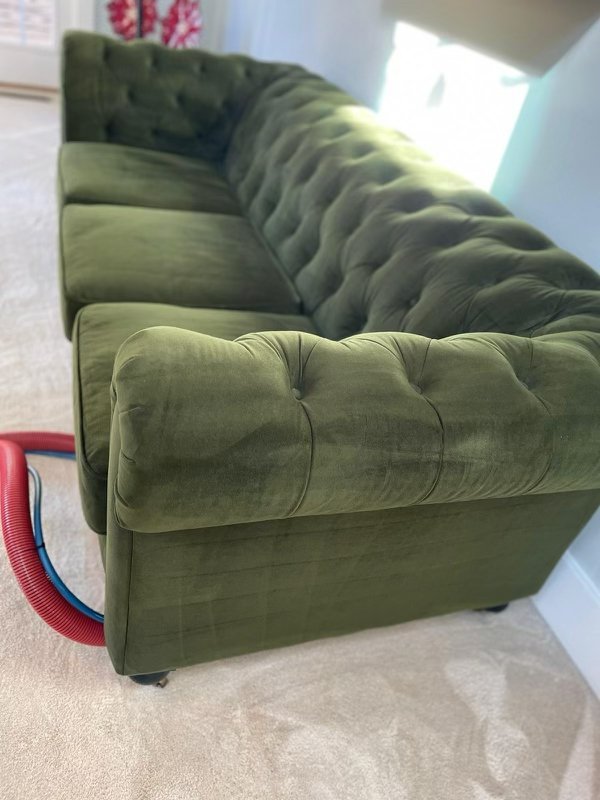
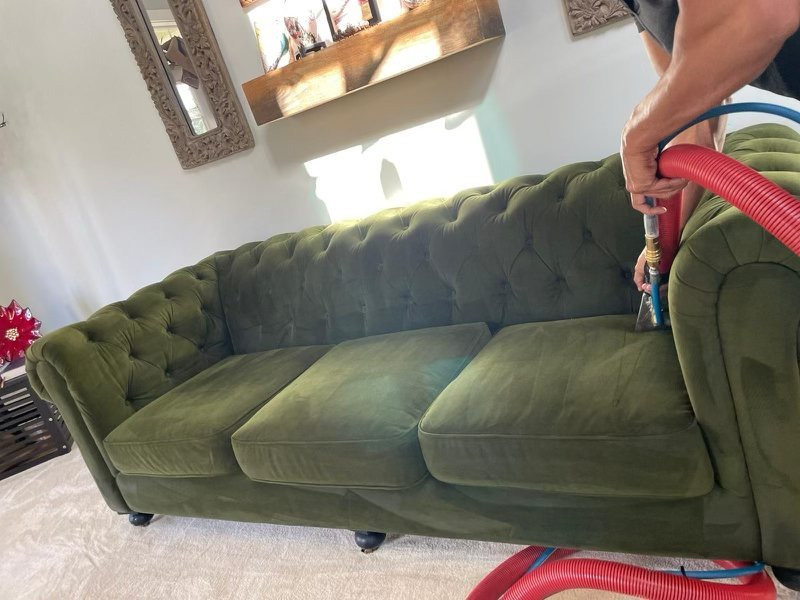
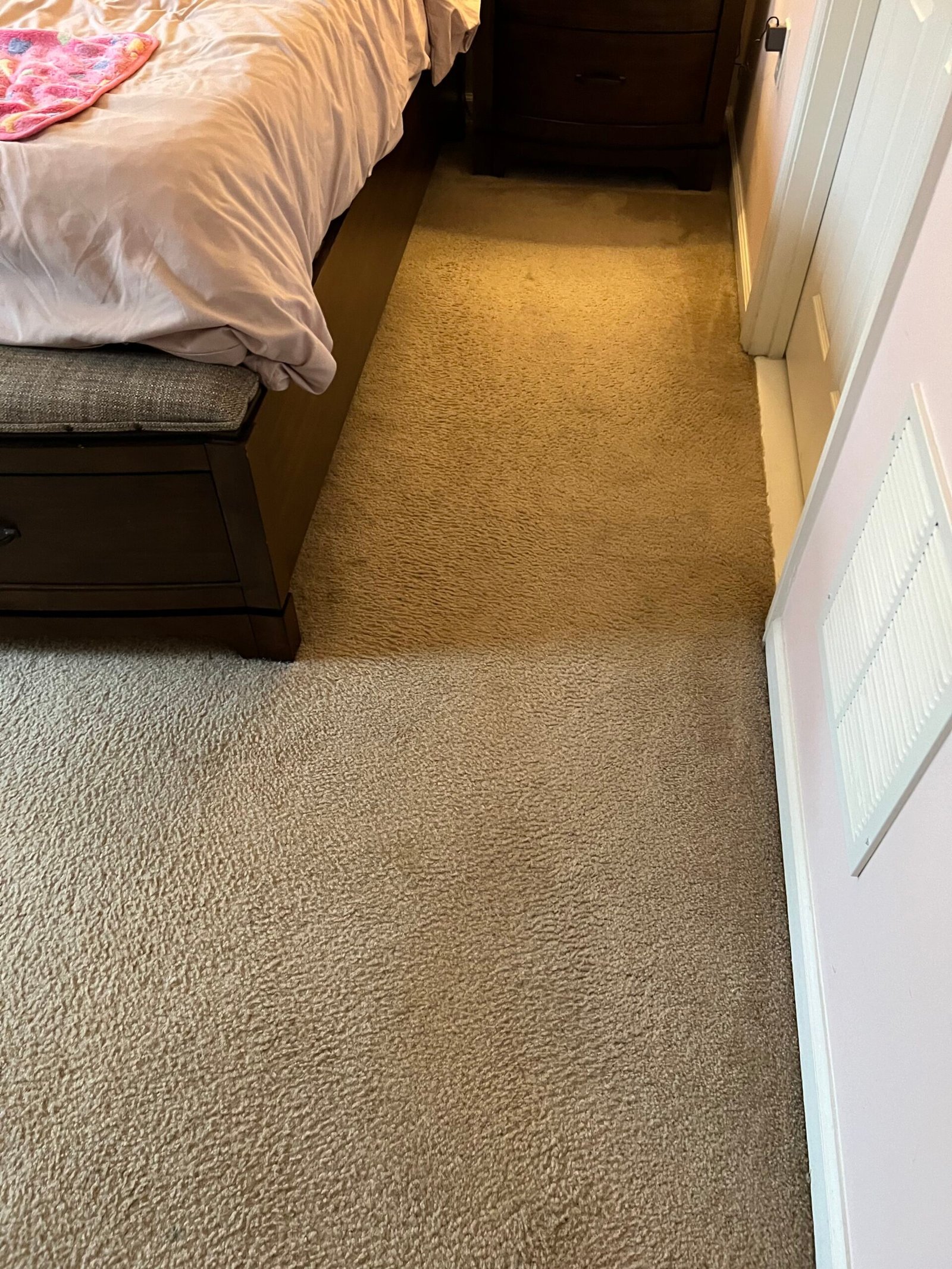
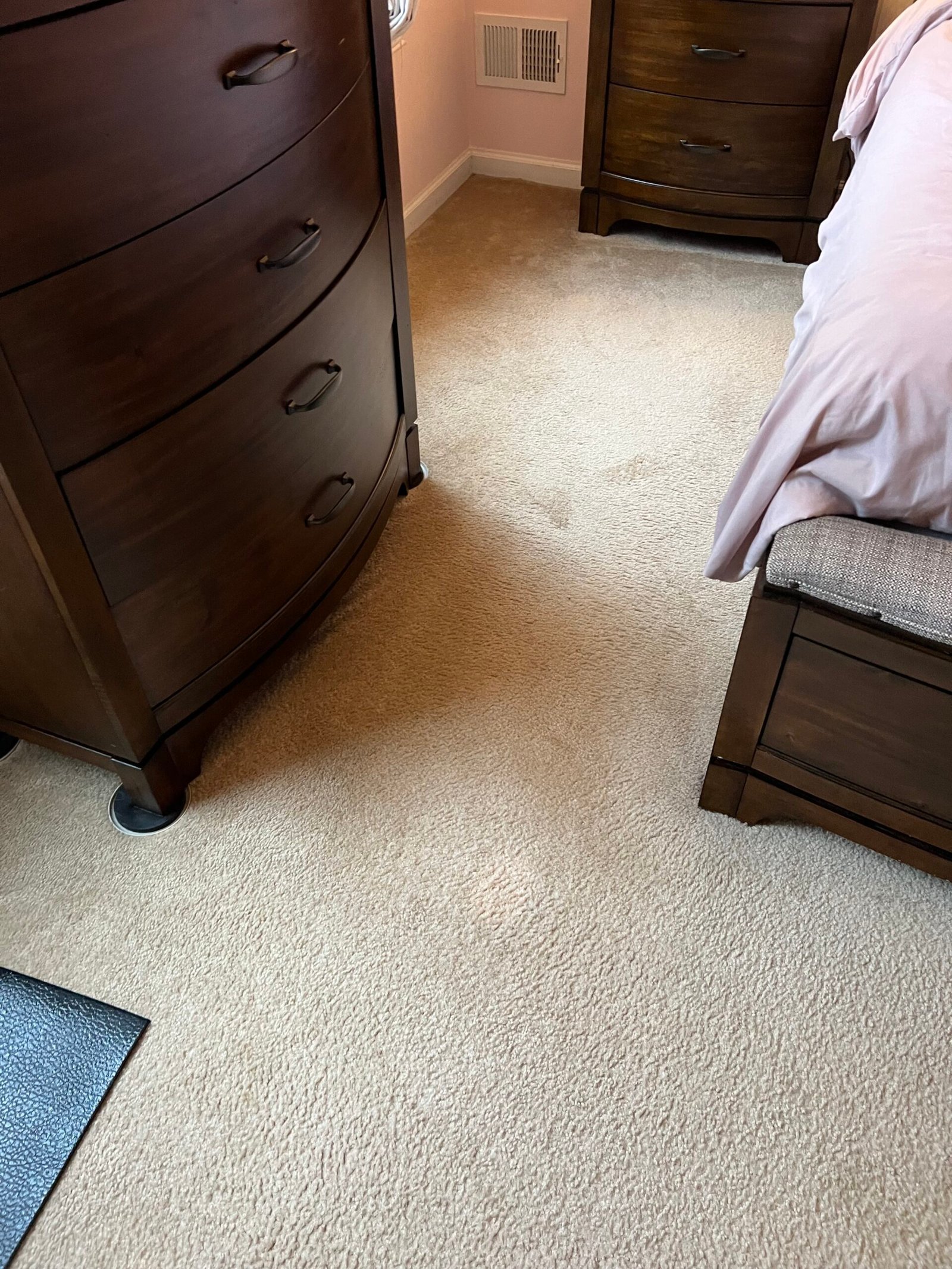
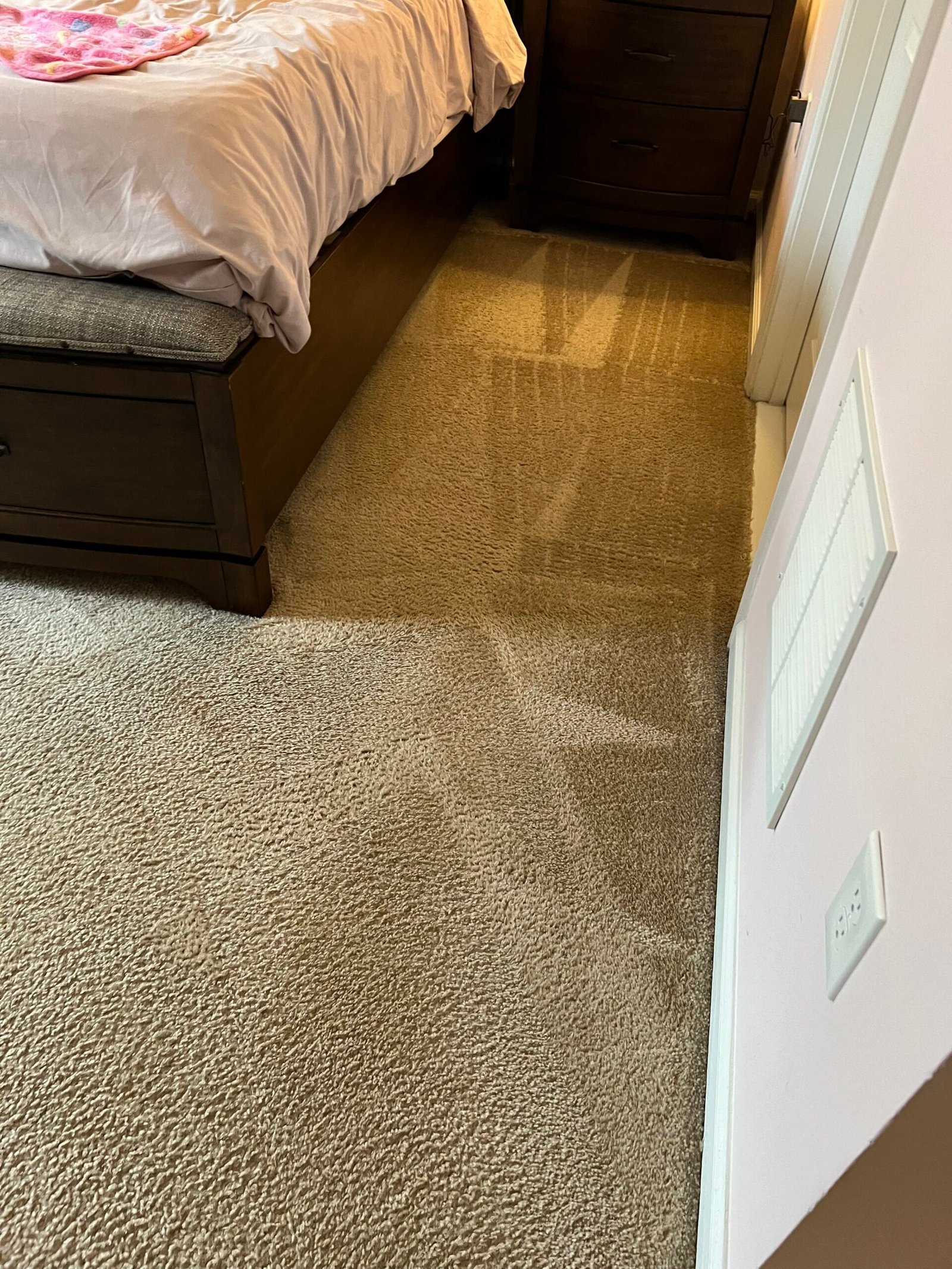
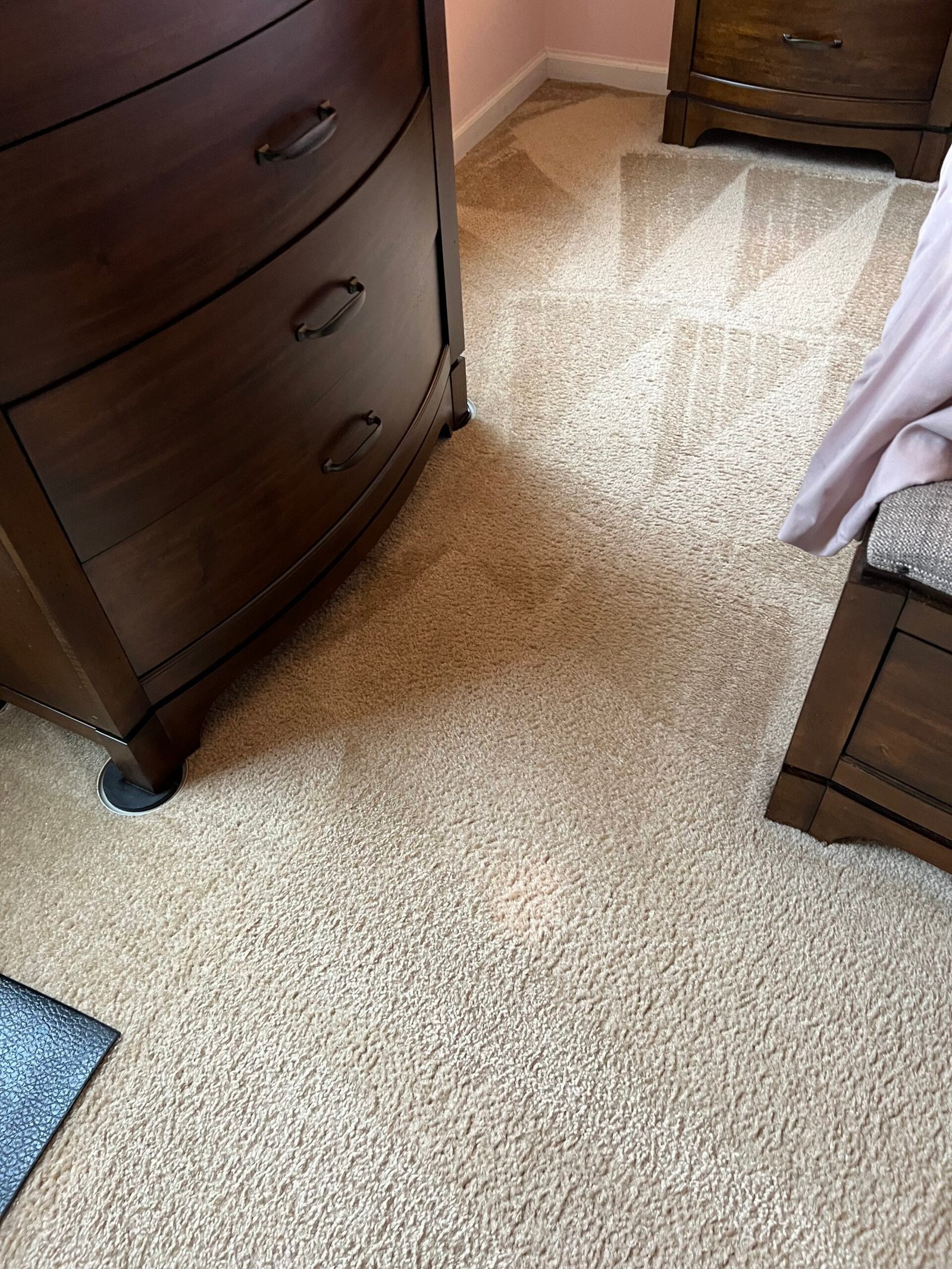
What this looks like
A real job, before and after. Drag the handle.
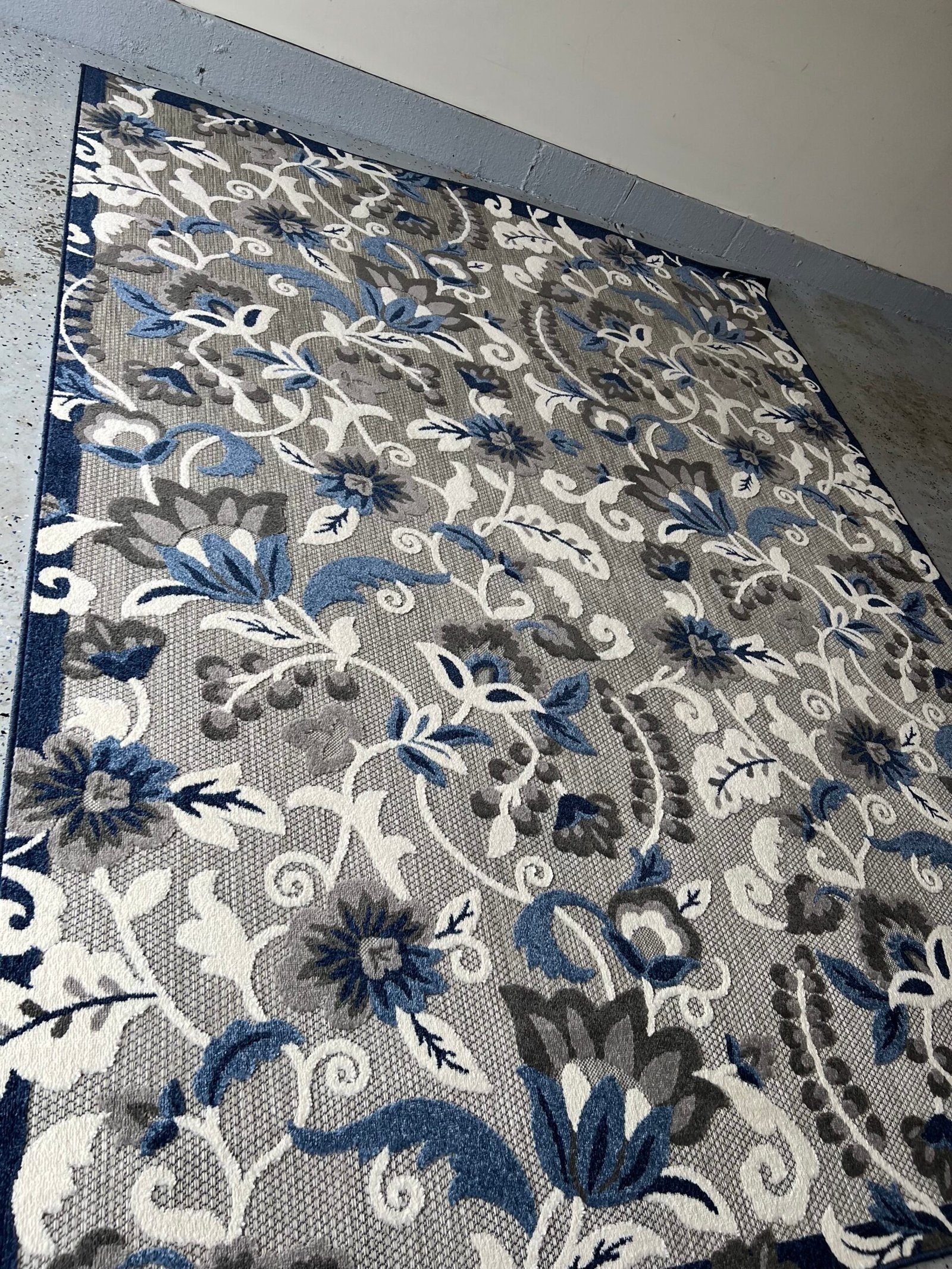
Drag the handle. The left half is where we came in.
Questions we get about this
The top of our sofa back is darker than the rest. Is that permanent?
Not usually, if it is caught within a few years. That band is body oil and hair product, which bonds to the fiber and darkens as it oxidizes. It needs an oil specific pre treatment with real dwell time, agitation and then extraction, sometimes twice. What does become permanent is oil left for four or five years, which is the main argument for cleaning on a schedule rather than waiting.
Why will not vacuuming remove it?
Because oil is not particulate. A vacuum removes loose material sitting on and between fibers, which is most ordinary soil, but oil has bonded chemically to the fiber surface and nothing about suction affects it. It has to be broken down with the right product, given time to work down to the base of the pile, then flushed out. That is a different process from the one that removes grit.
Our sectional has two recliner seats. Can those be cleaned?
Yes, with more care about moisture. Metal mechanisms and the fabric wrapped around them should not sit wet, so those seats get controlled application and immediate recovery rather than a heavy flush. We open and close each mechanism before finishing to make sure nothing damp is trapped in a fold and that no cushion is drying in a compressed position where air cannot reach it.
Should we separate the sectional before you arrive?
Not necessarily, but tell us whether it separates. Where the connectors allow it, splitting a large piece into its units lets us work more angles and gives much better airflow between the sections while it dries. If it is a single continuous frame, we plan around that instead. Either way we would rather handle the connectors ourselves than have hardware forced apart before we get there.
We have a dog and three kids on this sofa constantly. How often should it be cleaned?
Every nine to twelve months for a household like that. The interval is driven by oxidation rather than appearance: oil deposited by heads, arms and a dog gets harder to remove the longer it sits, and after three or four years the contact areas stay darker than the surrounding fabric no matter what is done. A regular rhythm keeps the whole piece looking even.
Do you clean under the seat cushions as well?
Every cushion comes up and the platform underneath is vacuumed, which is where crumbs, coins, hair and a surprising quantity of grit collect. Cushions themselves are cleaned on both faces rather than only the side facing up, since people flip them and the underside gets its own contact and soil. Then they go on edge so both faces and the foam get airflow while drying.
Can you treat the fabric so it resists spills afterward?
A protective treatment can be applied after cleaning on fabrics that accept it, and it works by giving you time before a spill soaks in rather than by making a sofa spill proof. On a piece that already came with a performance finish it adds less. We will tell you honestly whether your fabric is a good candidate rather than applying it to everything as a matter of routine.
Will the room smell of cleaning product afterward?
Only faintly, and it dissipates as the fabric dries. Anything applied is rinsed and recovered rather than left in the fabric, which is the same reason the sofa does not feel stiff or tacky afterward. Residue left behind is what causes rapid resoiling, so a proper rinse serves both purposes. Running a fan or the air handler clears any remaining smell within a couple of hours.
Have a look at it in person
Walkthroughs are free and take about fifteen minutes. We agree the scope together and point out anything that will not come out before a hose comes off the truck. Over a decade in Northern Virginia and that has not changed.